
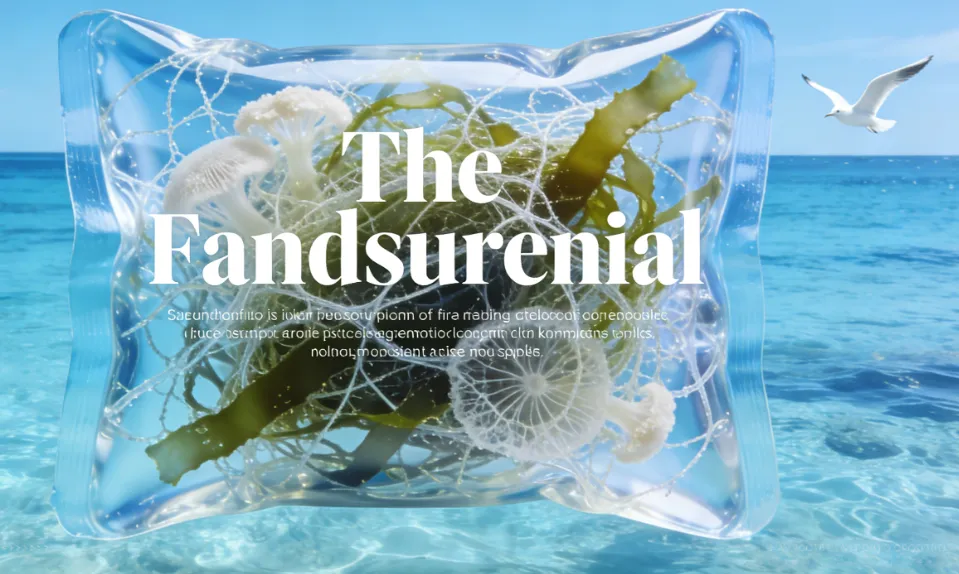
As a European environmental advocate and sustainability consultant, I’ve spent the past decade watching our oceans suffer at the hands of a packaging industry stuck in a fossil-fueled rut. Every year, 8 to 10 million metric tons of plastic waste floods our seas—80% of all marine pollution—killing marine life, poisoning our water, and threatening the livelihoods of coastal communities across Europe and North America. For too long, we’ve accepted “recyclable” as a solution, but the truth is harsh: less than 10% of plastic packaging is actually recycled, and even that often ends up in landfills or oceans. But there’s a glimmer of hope—one that doesn’t require us to sacrifice convenience or profitability. Seaweed and mycelium, two humble, abundant organisms, are revolutionizing packaging with 100% biodegradable solutions, and as the pressure to protect our oceans mounts, they’re forcing a long-overdue reckoning in the packaging supply chain. This isn’t just an environmental win; it’s a business imperative—one that’s reshaping how we source, produce, and dispose of packaging, and creating new opportunities for brands willing to lead the charge.
The Ocean Crisis: Why “Recyclable” Isn’t Enough Anymore
Let’s start with the facts—facts that hit close to home for anyone who’s walked a European beach or sailed the North Atlantic. In the EU alone, we produce 8,400 of packaging waste every year, with just 38% effectively recycled. Food packaging, which makes up 40% of EU plastic use, has a recycling rate of less than 17%—most of it ends up in our oceans, breaking down into microplastics that contaminate the fish we eat, the water we swim in, and even the air we breathe. In North America, the problem is equally dire: the U.S. generates more plastic waste per capita than any other country, and Canada’s plastic pollution crisis has led to nationwide bans on single-use plastics. For coastal communities in Portugal, Ireland, Maine, and British Columbia, ocean plastic isn’t just an environmental issue—it’s an economic one. Tourism, fishing, and marine recreation, which drive billions in revenue annually, are under threat as beaches are littered with packaging waste and marine ecosystems collapse.
We’ve been told for years that “reduce, reuse, recycle” is the answer, but the packaging industry’s reliance on fossil fuels and single-use plastics has made this nearly impossible. Traditional plastic packaging is designed to be cheap and durable—and that durability is its downfall. A plastic bottle can take 450+ years to decompose in the ocean; a plastic bag can take up to 1,000. Even “biodegradable” plastics often require industrial composting facilities to break down, facilities that are scarce in most parts of Europe and North America. This is where seaweed and mycelium step in: they’re not just “better” than plastic—they’re designed to disappear, naturally, without leaving a trace, even in marine environments. And as consumers, regulators, and investors demand action on ocean protection, these materials are no longer a niche innovation—they’re the future of packaging.
Seaweed Packaging: Nature’s Underrated Supermaterial
When most of us think of seaweed, we think of sushi rolls or beach wrack—but this humble marine plant is one of the most sustainable materials on the planet, and it’s quickly becoming a packaging game-changer. Seaweed grows rapidly—some species can grow up to 30 inches per day—without the need for freshwater, fertilizers, or pesticides. It absorbs carbon dioxide as it grows, helping to mitigate climate change, and it provides habitat for marine life, making seaweed farming a win-win for the ocean. Best of all, seaweed-based packaging is 100% biodegradable: if it ends up in the ocean, it breaks down in weeks, not centuries, feeding marine organisms instead of poisoning them.
The technology behind seaweed packaging is simpler than you might think. Seaweed is harvested (sustainably, of course—responsible seaweed farming doesn’t damage marine ecosystems), dried, and ground into a powder. This powder is then mixed with water and natural binders to create a flexible, durable film that can be used for everything from food wrappers and condiment sachets to shipping labels and even water-soluble packaging. Unlike traditional plastic, it’s edible (yes, edible!)—perfect for food packaging, where it can act as a natural preservative, extending the shelf life of fruits, vegetables, and snacks by reducing moisture loss and preventing oxidation.
In Europe, startups are leading the charge. Take Notpla, a UK-based company that’s revolutionizing single-use packaging with seaweed-based edible sachets. They’ve already replaced plastic condiment packets at major events like the London Marathon, and their innovation demonstrates how simple yet effective seaweed packaging can be in reducing plastic waste. Another European leader is Sway, a company pioneering seaweed-based films that are both biodegradable and compostable, designed for everything from snack packaging to e-commerce mailers. In North America, companies like Algiknit are using seaweed to create textile-based packaging, offering a sustainable alternative to plastic bubble wrap and packing peanuts.
The numbers speak for themselves: the global seaweed packaging market was valued at $597.24 million in 2025 and is projected to reach $1.163 billion by 2035, growing at a 6.9% CAGR over the next decade. Europe led the market in 2024, thanks to strict environmental regulations and consumer demand for sustainable products, while North America is expected to see significant growth driven by its booming e-commerce industry. For brands, this isn’t just a trend—it’s a market opportunity. Consumers are increasingly willing to pay a premium for sustainable packaging: 73% of U.S. respondents and 68% of global consumers say they’d pay 5% to 15% more for products with eco-friendly packaging, according to NielsenIQ surveys.
Mycelium Packaging: Fungi’s Hidden Power to Replace Plastic
If seaweed is the ocean’s gift to sustainable packaging, mycelium is the forest’s answer. Mycelium—the underground root network of mushrooms—might not sound glamorous, but it’s one of the most versatile, sustainable materials on Earth. Think of it as nature’s glue: mycelium grows by weaving together organic matter (like agricultural waste, sawdust, or hemp) into a dense, foam-like structure that’s lightweight, durable, and 100% biodegradable. It’s also carbon-negative: the mycelium absorbs carbon dioxide as it grows, locking it away in the material.
The process of creating mycelium packaging is a marvel of circular economy thinking. First, farmers or manufacturers collect agricultural waste—things like corn husks, hops, or timber scraps—that would otherwise end up in landfills. This waste is mixed with mycelium spores and placed in 3D-printed molds, where the mycelium grows and binds the waste together in just 5 to 7 days. The finished product is then dried, which stops the mycelium from growing further, resulting in a material that’s shock-absorbent, insulating, and customizable to any shape or size. Unlike plastic foam (EPS), which is made from fossil fuels and takes centuries to decompose, mycelium packaging breaks down in 4 to 6 weeks in soil or water, turning into nutrient-rich compost that feeds plants.
In Europe, companies like The Magical Mushroom Company (MMC) are leading the mycelium packaging revolution. Based in the UK, MMC holds licenses to produce “mushroom packaging” across the EU, UK, and Ireland, using Ecovative Design’s patented mycelium composite technology. Their packaging matches conventional polystyrene in performance and cost, and it’s already being used by brands like Lush Cosmetics, The Body Shop, Seedlip (from Diageo), and luxury designer Tom Dixon to package everything from cookers to cosmetics. MMC now operates four facilities in Europe—three in the UK and one in Bulgaria—with a combined annual production capacity of over 10 million units, and plans to expand to Germany and France soon. Another European innovator is Grown Bio, a Dutch company that uses mycelium and agricultural waste to create packaging that’s not just biodegradable, but also water-repellent, fire-resistant, and carbon-neutral—winning the 2023 German Sustainability Award in the raw materials industry for its innovation.
In North America, Ecovative Design (the company that patented the mycelium composite technology used by MMC) is a pioneer, working with brands like Dell, Adidas, and Whole Foods to replace plastic packaging with mycelium alternatives. Their mycelium-based packaging is used to protect electronics, shoes, and food products, offering the same level of protection as plastic but without the environmental cost. The global mycelium packaging market is growing just as rapidly as seaweed’s—fueled by the same consumer demand and regulatory pressure—and it’s expected to become a $10 billion industry by 2030, according to industry forecasts.
The Ocean Protection Imperative: How It’s Forcing Supply Chain Reconstruction
Seaweed and mycelium packaging are impressive on their own—but their true power lies in how they’re forcing the entire packaging supply chain to rethink its practices. For decades, the packaging industry has been built around a linear model: extract fossil fuels, produce plastic, use it once, and discard it. This model is not just unsustainable—it’s being actively rejected by regulators, consumers, and investors, all of whom are demanding action to protect our oceans. The result? A forced reconstruction of the packaging supply chain—one that prioritizes sustainability, circularity, and ocean protection at every step.
1. Regulatory Pressure: The EU’s PPWR and North America’s State-Level Bans
In Europe, the biggest driver of supply chain change is the EU’s Packaging and Packaging Waste Regulation (PPWR), which came into effect in February 2025 and will be fully implemented by August 2026. This landmark regulation replaces the 30-year-old Packaging and Packaging Waste Directive, introducing strict, mandatory targets that leave no room for inaction. The PPWR requires that by 2030, all packaging must be 100% recyclable or compostable, and overall packaging waste must be reduced by 15% compared to 2018 levels. It also restricts overpackaging, mandates that e-commerce packaging have a maximum ratio of 50%, and requires large companies to report their packaging’s carbon footprint and take steps to reduce it. For brands selling in the EU, compliance isn’t optional—it’s a legal requirement. This means that companies can no longer rely on traditional plastic packaging; they must switch to sustainable alternatives like seaweed and mycelium, which align with the PPWR’s compostability and circularity goals.
In North America, while there’s no federal-level equivalent to the PPWR, state and provincial governments are stepping up. California’s SB 54requires that by 2032, all packaging sold in the state be compostable or recyclable, and New York has banned single-use plastic bags and foam containers. Canada’s Single-Use Plastics Prohibition Regulations, in effect since 2023, bans six types of single-use plastics, including plastic cutlery and straws, forcing brands to adopt alternatives. These regulations are pushing packaging manufacturers to invest in seaweed and mycelium production, and brands to redesign their packaging to comply—creating a ripple effect throughout the supply chain.
2. Consumer Demand: Sustainability as a Non-Negotiable
Regulations are important, but consumer demand is the fuel that’s accelerating supply chain change. In Europe and North America, sustainability is no longer a “nice-to-have”—it’s a key factor in purchasing decisions. A 2024 survey by Euromonitor found that 78% of European consumers and 72% of North American consumers would avoid a brand if it uses excessive or unsustainable packaging. Millennials and Gen Z, in particular, are driving this demand: 83% of Gen Z consumers say they’re willing to switch brands to support sustainability, and 65% of millennials say they’d pay more for products with eco-friendly packaging.
This demand is forcing brands to rethink their packaging choices—and their supply chains. For example, Lush Cosmetics, a global brand with a strong presence in Europe and North America, has committed to using 100% biodegradable packaging by 2025, and they’ve partnered with MMC to use mycelium packaging for their products. Starbucks, which has faced criticism for its plastic cup waste, is testing seaweed-based cups in Europe that break down in marine environments in just 30 days. These brands aren’t just making a statement—they’re responding to consumer pressure, and in doing so, they’re pushing their suppliers to adopt seaweed and mycelium production.
3. Supply Chain Reconstruction: From Sourcing to Disposal
The shift to seaweed and mycelium packaging isn’t just a change in materials—it’s a complete reconstruction of the packaging supply chain, from raw material sourcing to end-of-life disposal. Here’s how it’s happening:
Sourcing: Local, Sustainable, and Circular
Traditional plastic packaging relies on fossil fuels, which are extracted from a handful of countries and transported globally—contributing to carbon emissions and supply chain vulnerability. Seaweed and mycelium, by contrast, can be sourced locally in Europe and North America. Seaweed can be farmed along the coasts of Ireland, Scotland, Portugal, Maine, and British Columbia, creating local jobs and reducing transportation emissions. Mycelium uses agricultural waste that’s already available locally—corn husks in the Midwest U.S., hops in Germany, sawdust in Canada—turning waste into a valuable resource. This local sourcing not only reduces the carbon footprint of packaging but also makes supply chains more resilient, less dependent on global fossil fuel markets, and supportive of local economies.
Production: Low-Carbon and Circular
The production of traditional plastic packaging is energy-intensive, relying on fossil fuels and emitting large amounts of carbon dioxide. Seaweed and mycelium packaging production, by contrast, is low-carbon and even carbon-negative. Seaweed absorbs CO2 as it grows, and mycelium locks away carbon in its structure. Production facilities for these materials are also smaller and more flexible than plastic factories—MMC’s facilities in the UK range from 7,000 to 15,000 square feet, compared to massive plastic plants that cover hundreds of thousands of square feet. Many mycelium production facilities also use renewable energy, further reducing their carbon footprint. Additionally, the production process is circular: agricultural waste is used as a substrate for mycelium, and leftover seaweed or mycelium can be composted or used as fertilizer, closing the loop.
Distribution: Lightweight and Efficient
Seaweed and mycelium packaging are lightweight—lighter than plastic foam or even paper packaging—which reduces transportation costs and emissions. Mycelium packaging, for example, is 30% lighter than EPS foam, meaning more packaging can be transported in a single shipment, reducing the number of trucks on the road. Seaweed-based films are also flexible and can be rolled up, reducing storage space and transportation volume. This efficiency not only saves brands money but also reduces the environmental impact of distribution—a key part of the supply chain that’s often overlooked.
End-of-Life: Zero Waste, Ocean-Friendly
The biggest difference between traditional plastic packaging and seaweed/mycelium packaging is their end-of-life. Traditional plastic ends up in landfills, oceans, or incinerators—all of which are harmful to the environment. Seaweed and mycelium packaging, by contrast, are 100% biodegradable: if they end up in the ocean, they break down in weeks, feeding marine life instead of poisoning it. If they’re composted, they turn into nutrient-rich soil that can be used to grow more crops or seaweed. This end-of-life cycle is circular, ensuring that no waste is left behind—and it’s exactly what the ocean needs to recover.
Challenges and Opportunities: The Road Ahead for Sustainable Packaging
While seaweed and mycelium packaging hold enormous promise, they’re not without challenges. The biggest barrier is scalability: currently, most seaweed and mycelium packaging production is done by startups, and scaling up to meet the demand of large brands requires significant investment. Cost is another challenge: seaweed and mycelium packaging is currently 20% to 50% more expensive than traditional plastic, though this gap is narrowing as production scales and technology improves. There’s also a need for more infrastructure: composting facilities that can handle these materials are still scarce in some parts of Europe and North America, though governments are investing in expanding this infrastructure to support the PPWR and other regulations.
But these challenges are far outweighed by the opportunities. For brands, adopting seaweed and mycelium packaging is a chance to differentiate themselves in a crowded market, build brand loyalty, and comply with increasingly strict regulations. For investors, it’s a chance to invest in a fast-growing industry that’s aligned with global sustainability goals—the global biodegradable packaging market is projected to reach $320 billion by 2030, with a CAGR of 13.8% from 2025 to 2030. For coastal communities, seaweed farming creates new jobs in sustainable industries, supporting local economies while protecting the ocean. And for the planet, it’s a chance to reduce plastic pollution, mitigate climate change, and restore our oceans to health.
Conclusion: The Future of Packaging Is Ocean-Friendly—and Profitable
As someone who’s spent years advocating for ocean protection, I’ve learned one important lesson: sustainability and profitability don’t have to be opposites. Seaweed and mycelium packaging prove that we can have packaging that’s convenient, durable, and cost-effective—while also being 100% biodegradable and ocean-friendly. The from ocean protection isn’t just a threat to the packaging industry; it’s an opportunity to rebuild a supply chain that’s more sustainable, more resilient, and more aligned with the values of consumers, regulators, and investors.
The EU’s PPWR, North America’s state-level bans, and consumer demand are all pushing the industry toward this future—and the brands that embrace it first will be the ones that thrive. Whether you’re a small business owner looking to reduce your environmental impact or a large corporation looking to comply with regulations and build brand loyalty, seaweed and mycelium packaging offer a solution. And as we adopt these materials, we’re not just changing the packaging industry—we’re protecting the oceans that sustain us, for generations to come.
The time to act is now. Our oceans can’t wait for another decade of plastic pollution. With seaweed and mycelium, we have the tools to create a packaging revolution—one that’s good for the planet, good for business, and good for our future. Let’s seize it.
Leave a Reply