
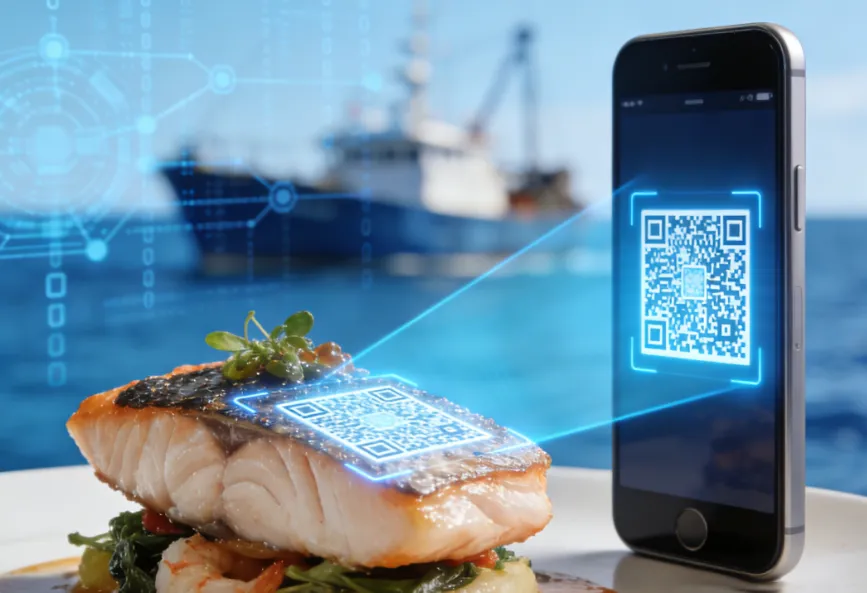
As a lifelong seafood enthusiast and someone who’s spent years working in the marine tech space, I’ve watched the luxury seafood industry grapple with a quiet crisis: even the most premium catches—think line-caught tuna from the Galápagos, MSC-certified salmon from Norway, or diver-sea scallops from the North Atlantic—often arrive at fine-dining tables and high-end markets with no real proof of their origin.
Consumers, chefs, and retailers are demanding more than just “sustainable” labels. They want verification. They want to know that the $100 steak tartare on their plate didn’t come from an overfished zone, that the lobster flown in from Maine wasn’t harvested in a protected area, and that the supply chain behind their luxury seafood is transparent, ethical, and built to protect the oceans we all depend on.
This is where blockchain technology is stepping in—not as a buzzword, but as a tangible, actionable solution. By creating an immutable, end-to-end trail from the moment a fish is pulled from the water to the second it’s plated, blockchain is turning the luxury seafood market’s biggest pain point—lack of traceability—into its greatest competitive advantage. It’s not just about fighting illegal, unreported, and unregulated (IUU) fishing. It’s about building trust, protecting marine biodiversity, and ensuring that the luxury seafood industry can thrive without compromising the health of our oceans.
In this deep dive, I’ll break down how blockchain is transforming the “boat to plate” journey for luxury seafood, the real-world projects proving its value, and why high-end markets that embrace this technology will win over discerning consumers, chefs, and retailers in the U.S., EU, and beyond.
The Hidden Crisis in Luxury Seafood: Why Traceability Matters More Than Ever
Let’s start with the facts: the global seafood industry loses an estimated $10–23 billion annually to IUU fishing—seafood that’s caught illegally, unreported, or in violation of conservation rules. For luxury markets, this isn’t just a moral issue; it’s a existential one.
Overfishing has pushed many iconic species to the brink. The Atlantic bluefin tuna, a staple of high-end sushi and sashimi, is classified as Endangered by the IUCN Red List, with populations down by more than 50% since the 1970s. North Atlantic right whales, whose migration routes overlap with critical fishing grounds, are on the brink of extinction, with only around 350 individuals left. Even farmed salmon—once seen as a “sustainable” alternative to wild-caught—faces scrutiny: poor farming practices can lead to sea lice infestations, disease spread to wild populations, and contamination of coastal ecosystems.
For luxury seafood buyers, the stakes are even higher. A customer paying $200 per pound for wild-caught king crab doesn’t just want a premium product—they want peace of mind. They want to know that the crab they’re serving wasn’t harvested in the Bering Sea’s closed zones, that the fisherman who caught it followed local quotas, and that the supply chain didn’t cut corners to cut costs.
Traditional supply chains can’t provide this. Here’s why:
- Fragmented data: Catch logs, shipping records, and quality checks are stored across paper files, spreadsheets, and separate databases—easy to alter, lose, or manipulate.
- Lack of standardization: No universal system for tracking seafood across borders, meaning a fish harvested in Norway might have no paper trail by the time it reaches a New York market.
- Seafood fraud: A 2023 Guardian Seascape analysis found a 36% mislabeling rate globally, with luxury seafood among the most frequently faked—think red snapper sold as grouper, or farmed tilaka sold as wild-caught sea bass.
- Regulatory gaps: While the EU and U.S. have strict rules to fight IUU fishing (the EU’s CATCH platform, launched in 2026, requires digital catch certificates for all imports; the U.S.’s SIMP program is expanding to cover all seafood imports), enforcement is hampered by limited traceability data欧盟委员会海事和渔业总司.
The result? Luxury seafood brands and retailers risk damaging their reputation, losing customer trust, and even facing legal repercussions if their products are linked to unsustainable or illegal fishing. Blockchain fixes this by creating a single, shared ledger that every stakeholder—fishermen, processors, distributors, retailers, and regulators—can trust.
How Blockchain Works for Luxury Seafood: From Boat to Plate, Step by Step
At its core, blockchain is a decentralized, immutable digital ledger that records transactions and data across a network of computers. Once data is added to the ledger, it can’t be altered or deleted—making it the perfect tool for tracking seafood from harvest to plate.
For luxury seafood, the process is designed to be seamless, non-intrusive, and focused on verifiability, not bureaucracy. Here’s a step-by-step breakdown of how it works, using a premium line-caught tuna as an example:
Step 1: Harvest – The First Link in the Chain
It all starts on the fishing boat. Here, technology meets tradition to capture critical data:
- GPS and vessel tracking: Every fishing vessel is equipped with an Automatic Identification System (AIS) or GPS tracker, which records real-time location data. This data is synced to the blockchain, creating a permanent record of where the fish was caught. For luxury seafood, this means verifying that the catch didn’t occur in a Marine Protected Area (MPA), a closed fishing zone, or a quota-exceeded area.
- IoT sensors: Onboard sensors track water temperature, depth, and fishing method (e.g., line-caught vs. trawled). For species like tuna, which are often line-caught to minimize bycatch, this data proves that the fish was harvested using sustainable methods.
- Fisher authentication: Each fisherman is assigned a unique digital identity, linked to their license and fishing vessel. When a catch is made, the fisher logs the harvest into a mobile app, which is immediately recorded on the blockchain. This eliminates the risk of “ghost fishing” or unlicensed fishermen profiting from illegal catches.
Key blockchain benefit: The moment the fish is pulled from the water, a “harvest event” is added to the ledger. This record is immutable—no one can go back and change the location, time, or method of harvest.
Step 2: onboard Processing – Preserving Quality and Integrity
After harvest, the fish is processed on the boat to maintain freshness—a critical step for luxury seafood, which demands the highest quality standards. Blockchain tracks every detail of this process:
- Temperature monitoring: Sensors record the temperature of the hold where the fish is stored, ensuring that it’s kept at the correct temperature (e.g., 32°F for tuna) to prevent spoilage. This data is synced to the blockchain, creating a “cold chain trail” that proves the fish was never exposed to unsafe temperatures.
- Sorting and grading: The fish is sorted by size, quality, and species, with each batch assigned a unique digital identifier (e.g., a QR code or RFID tag). This identifier is linked to the harvest event on the blockchain, creating a clear link between the fish and its origin.
- Quality certification: For luxury seafood, third-party certifications (e.g., MSC, ASC, or BAP) are often a selling point. These certifications are recorded on the blockchain, along with the date of certification and the certifying body. This eliminates the risk of fake certifications, a common problem in the seafood industry.
Key blockchain benefit: Every step of the onboard processing is recorded, creating a transparent trail that proves the fish was handled correctly and meets luxury quality standards.
Step 3: Landing & Port Inspection – Verifying Compliance
When the boat reaches port, the catch is inspected by local authorities to ensure compliance with fishing regulations. Blockchain streamlines this process:
- Digital catch documentation: Instead of paper logbooks, fishermen submit digital catch records to port authorities, which are verified against the blockchain. Authorities can instantly check that the catch was made in a legal zone, that quotas were followed, and that no protected species were caught.
- Batch verification: Each batch of seafood is scanned at the port, and the blockchain is queried to confirm its origin and compliance status. If a batch is flagged (e.g., caught in a closed zone), it can be immediately detained, preventing illegal seafood from entering the supply chain.
- Smart contracts for compliance: Smart contracts—self-executing contracts with the terms of the agreement written into code—can automate compliance checks. For example, a smart contract can be programmed to reject any batch caught in an MPA, ensuring that non-compliant seafood never makes it to market.
Key blockchain benefit: Port inspections become faster, more accurate, and less bureaucratic. Authorities can focus on high-risk batches instead of conducting time-consuming manual checks.
Step 4: Processing & Distribution – From Port to Retailer
Once the catch clears port inspection, it moves to processing facilities and then to distributors, retailers, and restaurants. Blockchain tracks every handoff:
- Batch tracking: Each batch is assigned a unique identifier that moves with it through the supply chain. When a processor purchases a batch, they scan the identifier, and the blockchain is updated to record the transfer—including the buyer’s identity, the date of transfer, and the price paid.
- Decentralized storage: Large files (e.g., video footage of the harvest, sensor data, or certification documents) are stored on a decentralized system like IPFS (InterPlanetary File System), with a hash of the file recorded on the blockchain. This ensures that the data is secure, accessible, and cannot be altered.
- Cross-border transparency: For luxury seafood sold in the U.S., EU, or other international markets, blockchain eliminates the need for paper-based customs documentation. All critical data—catch location, compliance records, quality certifications—is stored digitally, making cross-border shipping faster and more efficient. The EU’s new CATCH platform, for example, relies on digital traceability to verify that imported seafood meets EU sustainability standards.
Key blockchain benefit: Every transfer of ownership is recorded on the blockchain, creating a clear audit trail that can be accessed by anyone with permission—regulators, retailers, chefs, and consumers.
Step 5: Retail & Dining – The Final “Plate” Verification
The end of the supply chain is where transparency matters most to consumers. Blockchain makes it easy for anyone to verify a seafood product’s origin:
- QR code/RFID scanning: Luxury seafood products are labeled with a QR code or RFID tag that links to the blockchain. When a consumer or chef scans the code, they can view the entire journey of the fish—from harvest to plate—in seconds.
- Consumer-facing dashboards: Brands can build user-friendly dashboards that display key information: “This line-caught yellowfin tuna was harvested 120 miles off the coast of Costa Rica on March 10, 2026, using pole-and-line fishing (no bycatch), stored at 32°F throughout the supply chain, and inspected by the Costa Rican Ministry of Agriculture and Livestock on March 12.”
- Trust and transparency: For luxury seafood retailers and restaurants, this level of transparency is a competitive differentiator. It allows them to tell a story about their product—one that resonates with consumers who care about sustainability, ethics, and ocean health.
Key blockchain benefit: Consumers and chefs gain full visibility into the supply chain, eliminating doubt and building long-term trust in the brand.
Real-World Success Stories: Blockchain in Action for Luxury Seafood
Blockchain isn’t just a theoretical solution—it’s already being used by luxury seafood brands and markets around the world to drive traceability, fight IUU fishing, and protect marine biodiversity. Here are three standout projects that prove its value:
1. Norway’s Kvarøy Arctic: Blockchain for Sustainable Salmon
Norway is the world’s largest exporter of salmon, and Kvarøy Arctic—a family-owned salmon farm—has become a poster child for blockchain traceability. The farm partnered with IBM to launch a blockchain-based system that tracks every salmon from hatchery to plate.
Here’s how it works:
- Sensors monitor water temperature, oxygen levels, and fish health on the farm, with data synced to the blockchain.
- Each salmon crate is labeled with a QR code that links to the ledger, recording the farm’s location, feed ingredients, and harvest date.
- Processors, distributors, and retailers scan the QR code to verify the salmon’s origin and sustainability credentials.
Since launching in 2020, the project has expanded to 10 fish farms, and Kvarøy Arctic has seen a 30% increase in demand from luxury retailers and fine-dining restaurants in the U.S. and EU. “Consumers don’t just want to buy sustainable salmon—they want to prove it’s sustainable,” says Kvarøy Arctic CEO, Ståle Kleiberg. “Blockchain gives us that proof, and it’s been a game-changer for our brand.”
2. TRACE4EU: EU-Wide Blockchain Traceability for Seafood
The European Commission’s TRACE4EU project, built on the European Blockchain Services Infrastructure (EBSI), is creating a universal traceability system for all seafood imported into the EU. The project focuses on three key technologies:
- Verifiable Credentials (VCs): Digital certificates that verify the identity of fishermen, processors, and other stakeholders.
- QR Codes: Unique identifiers for individual seafood products (e.g., king crab, tuna) that link to the blockchain.
- Blockchain Ledger: A permanent, immutable record of every supply chain event, from harvest to import.
By 2028, TRACE4EU plans to integrate with the EU’s Digital Product Passport (DPP), creating a single, standardized traceability system for all seafood products sold in the EU. The project is already being piloted with Norwegian king crab, with early results showing a 50% reduction in IUU fishing-related seizures. “TRACE4EU is about building trust across the entire EU seafood supply chain,” says project lead, Maria Andersson. “Blockchain makes that trust possible by ensuring that every seafood product has a verifiable origin.”
3. Provenance: Tracing Tuna from Indonesia to the World
British tech company Provenance has developed a blockchain-based traceability system for tuna, starting with a pilot project in Indonesia—the world’s largest tuna-producing country. The project uses SMS technology (a low-cost, accessible tool for local fishermen) to capture catch data, which is then recorded on the blockchain.
Here’s the process:
- Local fishermen send SMS messages from their phones to log their catch, including location, species, and weight.
- The data is synced to the blockchain, creating a permanent record of the harvest.
- Processors, distributors, and retailers scan a QR code on the tuna to view its entire journey.
The pilot, which ran from January to June 2016, proved that blockchain could make traceability accessible even to small-scale fishermen. Since then, Provenance has expanded to other tuna-producing regions, including the Maldives and Sri Lanka, and partnered with luxury retailers like Whole Foods and high-end restaurants in New York and London. “Tuna is one of the most overfished species in the world, and IUU fishing is a huge problem,” says Provenance CEO, JP Glaving. “Blockchain allows us to give consumers the confidence that their tuna is sustainably sourced—and it allows fishermen to be fairly compensated for their catch.”
Why Luxury Seafood Markets Must Embrace Blockchain: The Business Case
For high-end seafood markets, embracing blockchain isn’t just about “doing good”—it’s about driving growth, building customer loyalty, and future-proofing your business. Here are the key business benefits:
1. Build Trust and Differentiate Your Brand
In the luxury market, trust is everything. A consumer paying $150 for a lobster roll doesn’t just care about taste—they care about values. Blockchain gives you the tools to tell a compelling story about your sustainability efforts, which resonates with today’s eco-conscious consumers.
A 2025 survey by the Luxury Institute found that 68% of luxury consumers are willing to pay 20–30% more for products that are sustainably and transparently sourced. For luxury seafood, this number is even higher: 72% of consumers say they’d pay a premium for seafood with a verifiable sustainable origin. By embracing blockchain, you’re not just selling a product—you’re selling a story, and that story will set you apart from competitors who can’t prove their sustainability.
2. Fight Seafood Fraud and Protect Your Reputation
Seafood fraud is a costly problem for luxury markets. A single incident of mislabeled or illegal seafood can damage your brand’s reputation for years, leading to lost sales, customer churn, and even legal action. Blockchain eliminates this risk by creating an immutable audit trail that can’t be altered. If a customer questions a product’s origin, you can instantly pull up the blockchain record to prove its legitimacy.
For example, if a restaurant is accused of serving mislabeled sea bass, they can scan the QR code on the fish to show that it was harvested in the Mediterranean, not Asia, and that it meets all EU and U.S. labeling standards. This not only clears their name but also reinforces their commitment to transparency.
3. Comply with Global Regulations (and Stay Ahead of the Curve)
Regulations around seafood traceability are tightening globally, and luxury seafood markets that don’t comply risk being locked out of key markets. The EU’s CATCH platform, launched in January 2026, requires all imported seafood to have a digital catch certificate—no exceptions. The U.S.’s SIMP program is expanding to cover all seafood imports, with new rules set to take effect in 2026 that mandate real-time traceability data.
Blockchain makes compliance easy: all critical data is stored digitally, making it easy to submit to regulators, pass inspections, and avoid fines. By adopting blockchain now, you’re not just complying with current regulations—you’re preparing for future rules, ensuring that your business can operate in any market, anywhere in the world.
4. Reduce Costs and Improve Efficiency
Traditional seafood supply chains are slow, bureaucratic, and costly—paperwork, manual data entry, and manual inspections add up. Blockchain streamlines these processes, reducing costs and improving efficiency:
- Faster cross-border shipping: Digital traceability eliminates
Leave a Reply