As someone who has spent decades building wealth in the tech industry, I’ve grown accustomed to checking boxes on charitable giving forms at the end of each year. Write a check to the World Wildlife Fund, donate to a local land trust, attend a gala for ocean conservation—these were my contributions to protecting the planet, and I felt good about them. But a few years ago, while on a “luxury eco-tour” in the Galápagos Islands, I had an epiphany that changed everything. I watched as a group of scientists knelt in shallow water, carefully placing coral fragments onto a degraded reef, and I thought: Why am I just watching? Why am I not rolling up my sleeves and helping?
That moment led me to trade passive philanthropy for something far more powerful: participatory conservation. For those of us with the means, it’s no longer enough to write a check and walk away. We’re craving meaningful, hands-on involvement—paying premium fees to join scientists in the field, whether that’s tagging sharks in the Great Barrier Reef, planting coral in the Galápagos, or rewilding endangered species in Patagonia. This isn’t just “eco-tourism with a purpose”; it’s a radical reimagining of how the affluent can contribute to conservation—one that benefits the planet, the scientific community, and ourselves in ways we never imagined.
Let’s be clear: Participatory conservation is not for everyone. It requires time, resources, and a willingness to get dirty (or, in my case, saltwater-soaked and sunburned). But for those of us who have been fortunate enough to accumulate wealth, it’s a chance to move beyond performative giving and make a tangible, direct impact. I’ve spent the past three years joining scientists on expeditions around the world, and what I’ve learned is this: Our money can open doors, but our presence—our hands, our time, our willingness to learn—can accelerate progress in ways even the largest donations cannot.
The Rise of Participatory Conservation: Why the Affluent Are Trading Checks for Wetsuits
For decades, conservation has relied on the generosity of wealthy donors. Organizations like the WWF owe much of their early success to initiatives like “The 1001: A Nature Trust,” a fund launched in 1970 that brought together 1,000 affluent individuals to contribute $10,000 each, providing a stable financial base for the organization’s work. But while these donations are critical, they often leave donors disconnected from the impact of their money. We write a check, receive a tax receipt, and maybe a quarterly newsletter—but we never see the reefs we’re protecting, the animals we’re saving, or the scientists we’re supporting.
That’s changing. A 2022 Ipsos survey found that 61% of affluent Americans say minimizing their environmental impact is important to them, but only 7% have taken an active role in an environmental cause in the past year. We’re tired of the gap between our values and our actions. We want to be part of the solution, not just fund it. Participatory conservation fills that gap. It allows us to trade the passive role of “donor” for the active role of “partner”—and in doing so, we find a deeper sense of purpose that traditional philanthropy simply can’t provide.
Take Kris Tompkins, the former CEO of Patagonia, and her late husband Doug, a co-founder of The North Face. They didn’t just donate $345 million to buy land in South America—they rolled up their sleeves and worked to rewild species like the huemul deer and Andean condor, creating six national parks and conserving 14.7 million acres of land and 30 million marine acres. “It’s not enough to protect the land,” Kris Tompkins said. “We have to bring back the species that have been missing. A landscape without wildlife is just scenery.” That’s the ethos of participatory conservation: it’s not just about preserving spaces—it’s about actively restoring them, and being part of that restoration.
For many of us, participatory conservation also satisfies a desire for authentic, unfiltered experiences. We’ve done the five-star resorts, the private safaris, the curated “eco-tours” where we’re herded from one photo op to the next. Those experiences feel hollow now. We want to do something that matters. We want to wake up at 5 a.m. to help scientists tag a shark, spend hours in the water planting coral, or hike through Patagonian forests to monitor rewilded species. These are not “luxury” experiences in the traditional sense—but they are luxurious in their meaning. They remind us that our wealth gives us not just privilege, but responsibility.
My Journey: From Check-Writer to Shark-Tagger and Coral Planter
My first participatory conservation experience was in the Great Barrier Reef, with a team of marine biologists from the Marine Megafauna Foundation—led by Dr. Simon J. Pierce, a renowned expert in whale sharks and manta rays who has developed non-invasive research techniques to track endangered marine species. I paid $15,000 to join the expedition for a week, and I went in with zero expectations—other than to get my hands dirty and learn something.
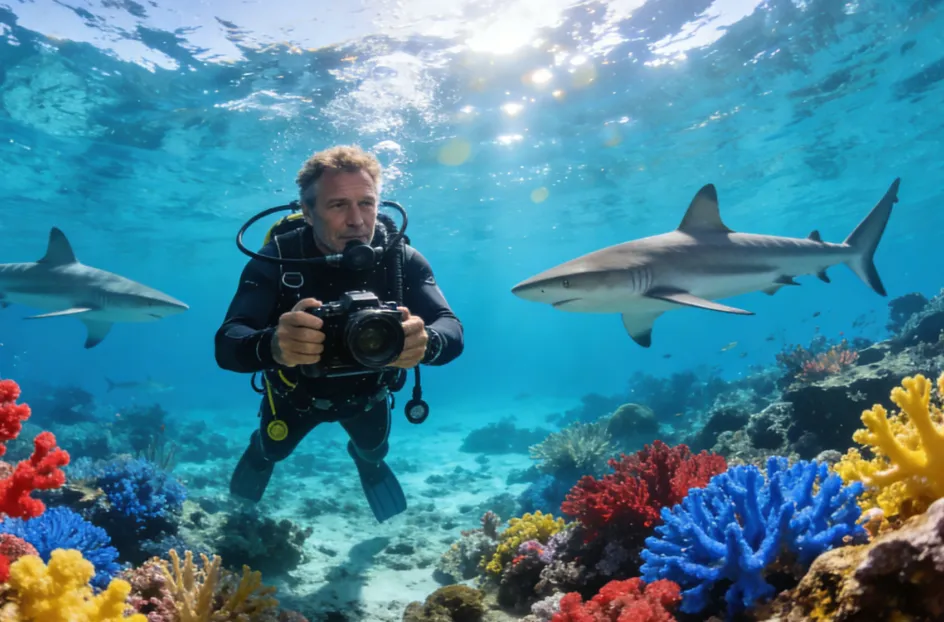
The first morning, we boarded a small research vessel at dawn, coffee in hand, and headed out to a remote section of the reef. The water was crystal clear, and as we jumped in with our wetsuits and snorkels, I felt a mix of excitement and nervousness. Our mission: tag juvenile reef sharks to track their movements and understand how climate change is affecting their habitat. The scientists walked us through every step: how to approach a shark without startling it, how to attach a small, non-invasive tag to its dorsal fin, how to record data that would help them protect the species.
I’ll never forget the moment I first held a shark in my hands. It was a small blacktip reef shark, no more than three feet long, its skin smooth and sleek. My heart was racing, but the scientists were calm, guiding me through the process. We attached the tag, took a quick photo for identification, and released it back into the water. As it swam away, one of the scientists turned to me and said, “That tag will give us data for the next two years—data that will help us protect this entire population.” In that moment, I felt something I’d never felt from writing a check: pride. I wasn’t just funding the research—I was part of it.
A few months later, I traveled to the Galápagos Islands to participate in a coral restoration project. The Galápagos is one of the most biodiverse places on Earth, but its coral reefs have been decimated by ocean acidification and rising temperatures. The project I joined was focused on “coral plug-ins”—small fragments of coral grown in nurseries, then planted onto degraded reefs to help them regrow. The process was tedious: we spent hours in the water, carefully placing each coral fragment onto a cement plug, then securing it to the reef. It was hard work—my arms ached, my skin was sunburned, and I swallowed more saltwater than I care to admit. But when we returned a year later, I saw something miraculous: the coral fragments we’d planted had grown, forming new colonies, and fish were starting to return to the area.
What surprised me most about these experiences was how much I learned. I went in thinking I was “helping the scientists,” but in reality, they were teaching me—about marine ecosystems, about climate change, about the delicate balance of nature. I learned that coral reefs are the “rainforests of the sea,” supporting 25% of all marine life. I learned that reef sharks are critical to maintaining healthy reefs, as they keep prey populations in check. I learned that even small actions—like planting a single coral fragment or tagging a single shark—can have a ripple effect.
I also learned about the challenges scientists face. Funding is scarce, resources are limited, and climate change is accelerating faster than anyone predicted. The scientists I worked with weren’t just researchers—they were warriors, fighting every day to protect the planet. By joining them in the field, I gained a new appreciation for their work—and a new sense of urgency to do more. It’s one thing to read about climate change in the news; it’s another thing to see a bleached coral reef with your own eyes, or to hold a shark that’s struggling to survive in a warming ocean.
The Economics of Participatory Conservation: Why It’s a Win-Win for Everyone
Critics often ask: Why pay $15,000 to tag a shark when you could donate that money to a conservation organization and let the scientists do the work? The answer is simple: participatory conservation is not a replacement for traditional philanthropy—it’s a complement. The fees we pay go directly to funding the research, the equipment, and the scientists’ salaries. When I paid to join the Great Barrier Reef expedition, my fee covered the cost of the research vessel, the tags, the scuba equipment, and the scientists’ time. In effect, I was funding the research while also participating in it.
For conservation organizations, participatory conservation is a game-changer. Traditional funding sources—grants, donations, government funding—are often unpredictable. Participatory programs provide a steady stream of revenue, allowing organizations to plan long-term projects and hire more scientists. The GEFCoral project, which focuses on coral restoration, details the significant costs of larval rearing, nursery setup, and in-situ planting—costs that participatory fees can help cover. It also allows organizations to engage with donors on a deeper level, turning one-time donors into long-term advocates.
For the affluent, the benefits are equally significant. Beyond the sense of purpose and the hands-on experience, participatory conservation offers a unique opportunity to connect with like-minded people. On every expedition I’ve joined, I’ve met other wealthy individuals who share my passion for conservation—business leaders, entrepreneurs, artists, and activists. We’ve bonded over our shared experiences, and many of us have gone on to fund additional projects together. It’s a community of people who are using their wealth to make a difference, and that’s incredibly powerful.
There’s also a personal benefit: these experiences are humbling. As someone who has built a successful career, I’m used to being in control. But in the field, I’m just another volunteer—following the scientists’ lead, learning from my mistakes, and realizing how small I am in the grand scheme of things. It’s a reminder that we’re all part of something bigger, and that our wealth doesn’t make us better than anyone else—it just gives us more opportunities to help.
Navigating the Pitfalls: Avoiding “Greenwashing” and Ensuring Authentic Impact
As participatory conservation grows in popularity, it’s important to be wary of “greenwashing”—companies and organizations that market “eco-friendly” experiences without delivering real impact. We’ve all seen the ads: “Pay $5,000 to swim with dolphins and save the ocean!” only to find out that the experience is little more than a tourist attraction, with no real conservation value. So how do we ensure that our participation is authentic?
First, do your research. Look for organizations that are led by scientists, not marketers. The Marine Megafauna Foundation, for example, is led by Dr. Simon J. Pierce and other leading marine biologists, and all of their programs are rooted in scientific research. Avoid organizations that prioritize “photo ops” over actual conservation work. Ask questions: Where does the money go? What specific research or restoration projects are you supporting? How will your participation help the environment?
Second, be realistic about your impact. You’re not going to “save the Great Barrier Reef” in a week. But your participation can help fund critical research, support local communities, and raise awareness. The key is to view participatory conservation as a long-term commitment, not a one-time experience. I’ve been supporting the same coral restoration project in the Galápagos for three years, and I’ve seen the progress firsthand. It’s slow, but it’s real.
Third, be mindful of the local community. Conservation isn’t just about protecting animals and ecosystems—it’s about supporting the people who live in those areas. Many participatory conservation programs work with local communities, hiring local guides, supporting local businesses, and involving local people in the work. In Costa Rica, for example, national parks and biological reserves have become key drivers of economic and social development, benefiting 477 communities and training 1,533 indigenous people. When you participate in a conservation project, make sure that local communities are being treated fairly and that their voices are being heard.
We also need to learn from mistakes. A recent study in Indonesia found that paying fishermen to release sharks and rays can have unintended consequences—including an increase in shark deaths, as some fishermen began catching more sharks to collect the reward. The lesson here is that participatory conservation programs need to be carefully designed, with input from scientists and local communities, to ensure that they don’t do more harm than good. As Dr. Hollie Booth, the lead researcher on the study, said: “Paid放生 is feasible, but it needs to be carefully designed.”
The Future of Conservation: How the Affluent Can Lead the Way
Climate change is the greatest challenge of our time, and it’s clear that governments and nonprofits can’t solve it alone. The affluent have a unique role to play—not just with our money, but with our time, our influence, and our willingness to lead. Participatory conservation is just one way we can do that, but it’s a powerful one.
Imagine a world where thousands of wealthy individuals are joining scientists in the field, funding research, and advocating for change. Imagine a world where conservation is no longer seen as a “charity” but as a collective responsibility. That world is possible—and it starts with us.
For those of us who have the means, the choice is clear: we can continue to write checks and feel good about ourselves, or we can roll up our sleeves and get involved. We can be part of the problem, or part of the solution. I choose the latter.
Over the past three years, I’ve tagged sharks in the Great Barrier Reef, planted coral in the Galápagos, and volunteered with rewilding projects in Patagonia. I’ve learned more than I ever thought possible, made lifelong friends, and found a sense of purpose that goes beyond my career or my wealth. And I’ve realized that participatory conservation isn’t just about protecting the planet—it’s about protecting ourselves. Because if we lose the coral reefs, the sharks, the forests, and the wildlife, we lose a part of ourselves too.
So to my fellow affluent friends: I challenge you to step outside your comfort zone. Trade your checkbook for a wetsuit. Trade your gala gown for hiking boots. Join the scientists in the field. You’ll be surprised by how much you learn, how much you grow, and how much good you can do. The planet needs us—and it needs us now.
After all, as Kris Tompkins said: “The entire ecosphere and its future depend on healthy, vibrant and rich biodiversity.” We have the power to protect that biodiversity—not just with our money, but with our hands, our hearts, and our commitment. Let’s use it.
Leave a Reply