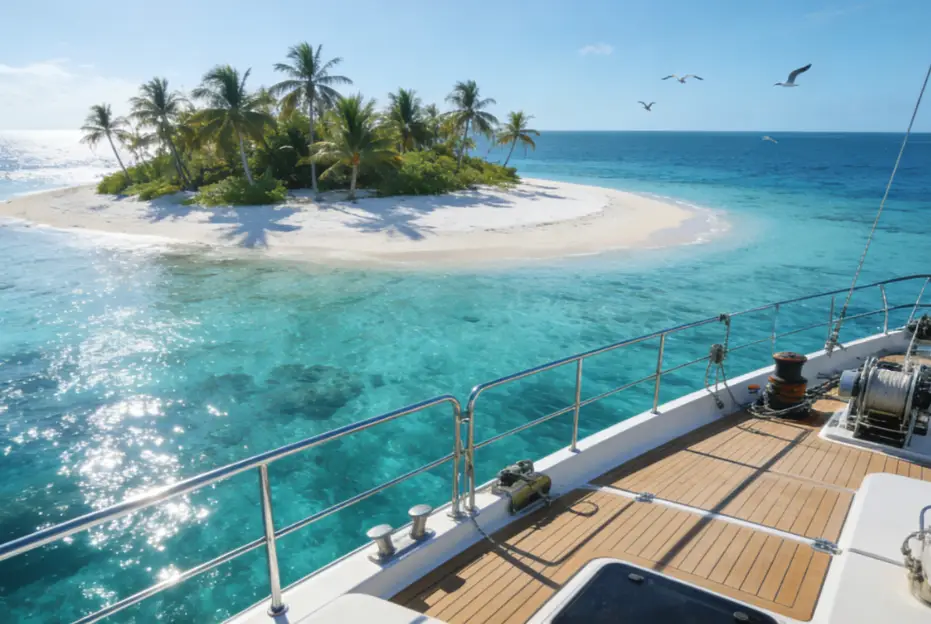
For decades, the definition of maritime luxury was anchored in the glitz of St. Tropez and the crowded docks of Monaco. However, as we move through 2026, a profound shift is occurring in the world of high-net-worth travel. The modern explorer is no longer seeking to be seen; they are seeking to disappear. This is the era of “The Blue Sanctuary”—a movement where cutting-edge marine technology meets an uncompromising desire for privacy and ecological purpose.
The Evolution of the “Explorer Yacht”: Beyond the Horizon
The traditional “white boat” mega-yacht—designed primarily for coastal cruising and social posing—is being rapidly replaced by a more rugged, sophisticated breed: the Explorer Yacht. These vessels are no longer mere floating villas; they are maritime fortresses built with ice-class hulls and transoceanic range, capable of reaching the most remote corners of the Arctic or the untouched archipelagos of the South Pacific.
Today’s yacht owners are prioritizing Marine Engineering over mere aesthetics. We are seeing a surge in demand for vessels equipped with DP (Dynamic Positioning) systems, which allow ships to stay in place without dropping anchors that damage fragile coral reefs.
Moreover, the integration of Hydrogen-Cell Technology and hybrid battery banks has become the new status symbol. For the modern billionaire, the ultimate luxury isn’t the gold-plated faucet; it is the ability to cruise through a UNESCO World Heritage site in total silence, leaving zero carbon footprint behind. This technological leap aligns perfectly with the global push for Ocean Conservation and the burgeoning Blue Economy, attracting interest from ESG-focused investment funds and green-tech giants.
Sustainable Private Islands: The Zenith of Luxury Real Estate
While yachts offer the freedom of mobility, the Private Island Resort remains the ultimate anchor of seclusion. However, the 2026 version of island living is far removed from the “concrete-and-gold” aesthetics of the past decade. The new “Gold Standard” is defined by Biophilic Design—architecture that integrates seamlessly with the natural environment.
From the Seychelles to the private archipelagos of Fiji, we are witnessing the rise of ultra-exclusive destinations that operate entirely on circular economies. These resorts aren’t just sustainable; they are regenerative.
- Zero-Waste Gastronomy: On-island hydroponic farms and sustainable “pole-and-line” fishing programs.
- Renewable Infrastructure: 100% solar-glass windows and deep-ocean water cooling (SOC) systems that eliminate the need for traditional air conditioning.
For the elite traveler, the “experience” now includes active participation. High-end resorts now offer “Citizen Science” packages where guests work alongside resident marine biologists to track migratory whale patterns or utilize AI-powered drones to monitor reef health. This shift has opened a massive advertising window for Luxury Travel Agencies, Bespoke Real Estate Developers, and High-End Sustainable Fashion Brands.
The Abyss: The Final Frontier of Adventure Tech
As the surface of the ocean becomes more accessible, the elite have turned their gaze downward. The “must-have” accessory for 2026 is no longer a supercar on the deck, but a Personal Submersible. Industry leaders like Triton Submersibles and U-Boat Worx are seeing record-breaking orders for pressurized acrylic spheres that allow passengers to descend to “The Midnight Zone” (1,000 meters deep) in climate-controlled comfort.
This interest in the abyss is fueled by the “Explorer Mindset.” The modern high-net-worth individual (HNWI) often views themselves as a pioneer. This has led to the integration of:
- Satellite Connectivity (LEO): High-speed internet via Starlink-type constellations, allowing CEOs to run global empires from the middle of the Indian Ocean.
- Underwater Robotics: AI-driven ROVs (Remotely Operated Vehicles) that capture 8K footage of rare marine species, which are then shared in exclusive digital communities.
This intersection of high-stakes technology and leisure is a goldmine for Aerospace & Defense contractors, High-End Electronics, and Cyber-Security firms looking to place ads on premium content.
The Psychology of “Silent Luxury”
Why is this happening now? Psychologically, the global elite are moving toward “Experiential Wealth.” In an era of hyper-digitalization and constant surveillance, the deep ocean represents one of the few remaining places where one can experience “The Great Silence.”
The marketing of these experiences focuses on “time” and “legacy”—the two things money cannot easily buy. By investing in a yacht that doubles as a research vessel or an island that acts as a sanctuary, the wealthy are crafting a narrative of being “Guardians of the Deep.” This narrative is incredibly attractive to Luxury Watchmakers (Rolex, Blancpain) and Wealth Management Firms who want to associate their brands with longevity and responsibility.
Conclusion: A Legacy Beneath the Waves
As the horizon of luxury continues to expand, one thing is certain: the ocean is no longer just a backdrop for a vacation; it is a precious resource that requires our protection and understanding. In 2026, the most exclusive experience money can buy is not just a destination—it is the feeling of being at one with the silent, undisturbed pulse of the sea.
For the brands and advertisers who inhabit this space, the message is clear: the future is blue, it is deep, and it is sustainable.
Leave a Reply