
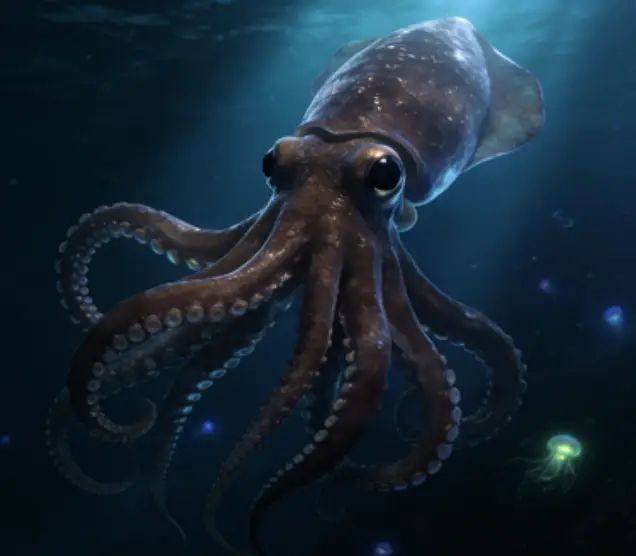
Why the Giant Squid Still Captivates Us 🌊
I still remember the first time I saw an illustration of a giant squid as a kid. It was wrapped around a wooden ship, its massive tentacles dragging sailors into the dark. At the time, I thought it was pure myth — something closer to Kraken lore than real biology.
But the giant squid (Architeuthis dux) is very real.
As someone who has spent years reading, writing, and speaking about marine science for Western audiences, I can confidently say this: few animals sit at the crossroads of myth, science, and wonder quite like the giant squid.
In this article, I want to take you with me — not as a distant narrator, but as a fellow explorer — into the shadowy depths where this elusive animal lives. We’ll talk about what we know, what we don’t, and why the giant squid still matters in the 21st century.
So grab a coffee ☕, and let’s dive deep.
What Exactly Is a Giant Squid? 🧬
The giant squid is one of the largest invertebrates on Earth. Let that sink in for a moment.
No bones.
No shell.
Just muscle, nerve, and mystery.
Basic Facts at a Glance
- Scientific name: Architeuthis dux
- Length: Up to 40–43 feet (12–13 meters)
- Weight: 300–600 pounds (135–275 kg)
- Habitat: Deep ocean, typically 1,000–3,000 feet below the surface
- Diet: Fish, other squid, and deep-sea prey
Unlike whales or sharks, the giant squid doesn’t dominate the ocean through brute strength alone. Instead, it relies on stealth, speed, and anatomy that seems almost alien.
A Body Built for the Deep 🦑
One of the reasons I find the giant squid so fascinating is that its entire body is a blueprint for survival in darkness.
The Arms and Tentacles
The giant squid has:
- 8 shorter arms
- 2 extremely long feeding tentacles
These tentacles are lined with powerful suction cups, each ringed with sharp, rotating teeth. This isn’t decorative — it’s functional, and brutally effective.
When prey is detected, the squid strikes in milliseconds.
The Largest Eyes in the Animal Kingdom 👁️
Yes, really.
The giant squid has eyes roughly the size of dinner plates — about 10–11 inches (25–28 cm) in diameter.
From a Western scientific perspective, this adaptation makes perfect sense. In the deep sea:
- Light is scarce
- Bioluminescence is key
- Detecting predators (like sperm whales) is a matter of life and death
Those massive eyes allow the squid to detect faint glimmers of movement from far away.
Where Do Giant Squids Live? 🌍
One of the most common questions I get from readers is:
“Why don’t we see them more often?”
The answer is simple — they live where humans rarely go.
Known Distribution
Giant squids have been found in:
- The North Atlantic
- The South Atlantic
- The Pacific Ocean
- Waters near Japan, New Zealand, and South Africa
They are cosmopolitan, meaning they’re globally distributed — but always deep.
Why Seeing a Live Giant Squid Is So Rare 📸
For centuries, all we had were:
- Beached carcasses
- Fragments found in whale stomachs
- Sailor stories
It wasn’t until 2004 that scientists captured the first-ever images of a live giant squid in its natural habitat. And even then, the footage was brief and grainy.
From a modern Western science standpoint, this rarity isn’t frustrating — it’s exhilarating. It reminds us that Earth still holds secrets.
Giant Squid vs. Sperm Whale 🐋⚔️
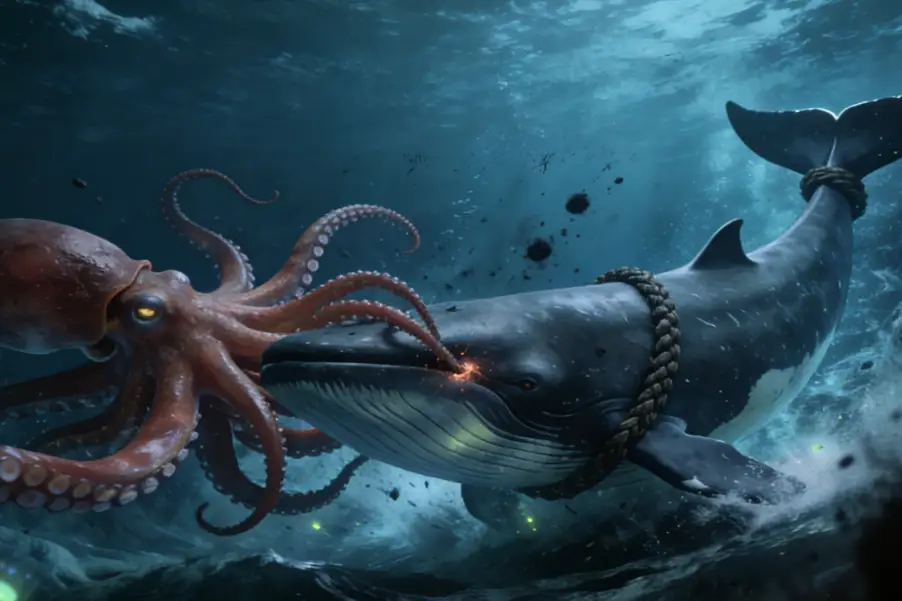
No discussion of the giant squid is complete without mentioning its greatest rival: the sperm whale.
Evidence of an Epic Battle
- Sperm whales routinely hunt giant squids
- Whale skin often bears circular scars matching squid suckers
- Squid beaks are commonly found in whale stomachs
This is deep-sea predator-prey interaction on a mythic scale — and it’s happening right now, far below the waves.
Intelligence: Smarter Than We Think? 🧠
While squids don’t think the way mammals do, they are highly intelligent in their own right.
Cephalopods:
- Solve puzzles
- Learn from experience
- Exhibit complex behaviors
As a Western science writer, I find this especially compelling because it challenges our mammal-centric view of intelligence.
The Role of Giant Squids in Ocean Ecosystems 🌱
Giant squids are not just curiosities — they are keystone species.
They:
- Help regulate fish populations
- Serve as major prey for sperm whales
- Indicate deep-sea ecosystem health
When we talk about ocean conservation, animals like the giant squid remind us that what happens in the depths affects the surface.
Myths, Legends, and the Kraken 🐙📖
Let’s be honest — part of the giant squid’s appeal comes from myth.
The Kraken, Norse legends, medieval sea monsters — these stories didn’t come from nowhere. They came from real encounters, exaggerated by fear and imagination.
As a Western storyteller, I don’t see myth and science as enemies. I see them as two ways humans try to understand the unknown.
Threats and Conservation Concerns ⚠️
Ironically, giant squids aren’t directly hunted — but they are still at risk.
Major Threats Include:
- Deep-sea fishing bycatch
- Noise pollution
- Climate change altering ocean chemistry
The deep sea is no longer out of reach. And that should concern all of us.
Why the Giant Squid Still Matters 🧭
To me, the giant squid represents something bigger than itself.
It represents:
- The limits of human knowledge
- The importance of exploration
- The need for humility in science
In an age where we map planets light-years away, there are still creatures on our own world we barely understand.
And honestly? That’s a beautiful thing. ✨
Looking Into the Deep 🖤
Every time I write about the giant squid, I’m reminded why I fell in love with science in the first place.
Not because it has all the answers —
but because it invites us to keep asking questions.
Somewhere, right now, a giant squid is drifting through the dark, unseen and unbothered by our curiosity.
And maybe that’s exactly how it should be.
Leave a Reply