Introduction: The Day I Met a Living Ocean Myth
I still see it clearly. I was waist‑deep in the cool waters of the Pacific, somewhere along the California coast, when something huge and softly undulating slid past my fins. My first instinct was disbelief—this couldn’t possibly be a sea slug. And yet, it was. Not just any sea slug, but the giant sea hare, known to science as Aplysia vaccaria.
In Western popular culture, we often associate the ocean’s giants with whales, sharks, or perhaps the occasional giant squid. But the giant sea hare challenges that narrative. It’s a creature that looks alien, moves gracefully, and plays a surprisingly important role in marine ecosystems—and even in modern neuroscience.
In this article, I want to take you on a journey through the life of this remarkable animal: what it is, how it lives, why it matters, and why it deserves far more attention than it usually gets.
What Exactly Is a Giant Sea Hare?
Let’s start with the basics.
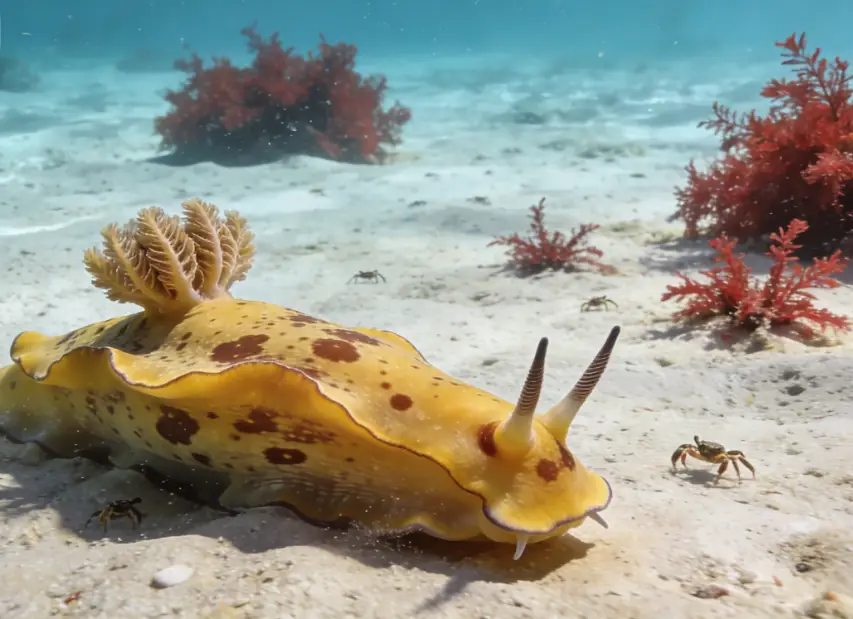
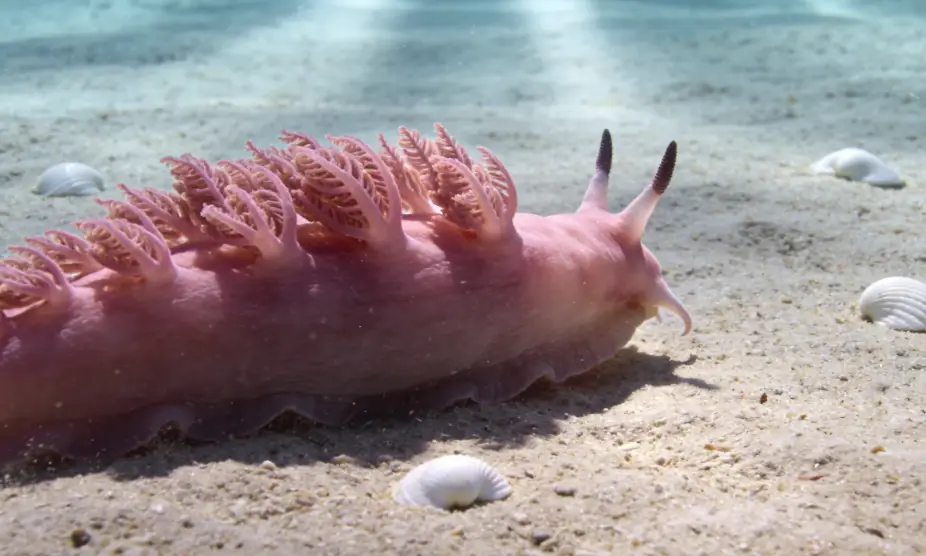
The giant sea hare is a marine gastropod mollusk, meaning it’s a relative of snails and slugs. Despite the name “hare,” it’s not even remotely related to mammals. The name comes from two ear‑like sensory structures on its head—called rhinophores—that reminded early observers of rabbit ears 🐰.
Quick Facts at a Glance
- Scientific name: Aplysia vaccaria
- Common name: Giant sea hare
- Maximum length: Up to 75 cm (about 2.5 feet)
- Weight: Over 13 kg (nearly 30 pounds)
- Habitat: Eastern Pacific Ocean
- Diet: Algae (strictly herbivorous)
By Western standards of “slug,” this animal is enormous. In fact, it’s often cited as the largest sea slug in the world.
Where I Find Them: Habitat and Distribution 🌍
If you live or dive along the Pacific coast of North America, you’re in giant sea hare territory.
Geographic Range
Giant sea hares are found from:
- Northern California
- Down through Baja California
- Into the Gulf of California
They favor shallow coastal waters, especially:
- Kelp forests
- Rocky reefs
- Seagrass beds
From a Western environmental perspective, these habitats are already under pressure from climate change, pollution, and coastal development. That makes understanding species like the giant sea hare even more urgent.
A Body Built for the Ocean
When I first touched a giant sea hare (gently and respectfully), I was struck by how soft and muscular it felt—almost like firm gelatin.
Key Physical Features
- Parapodia: Large, wing‑like flaps that allow limited swimming
- Internal shell: A thin, reduced shell hidden under the mantle
- Coloration: Usually dark brown, reddish, or purplish
- Ink gland: Produces purple ink as a defense mechanism
That purple ink isn’t just dramatic—it’s chemically sophisticated. Studies show it can confuse predators’ sense of smell and taste, buying the sea hare precious time to escape 🟣.
How a Giant Sea Hare Lives Its Life
Diet: The Ocean’s Lawn Mower 🌱
Giant sea hares are voracious herbivores. They feed almost exclusively on algae, consuming massive quantities every day.
From an ecosystem standpoint—especially one familiar to Western marine ecologists—this matters a lot. By controlling algal growth, sea hares help:
- Prevent algal overgrowth
- Maintain healthy kelp forests
- Support biodiversity
In many ways, they function like underwater grazing animals, similar to how bison shape grasslands on land.
Movement: Slow, Steady, and Surprisingly Graceful
Most of the time, giant sea hares crawl slowly along the seafloor. But when threatened, they can:
- Contract their bodies rapidly
- Flap their parapodia
- Perform short bursts of swimming
Watching a 30‑pound slug swim is one of those experiences that permanently rewires your understanding of marine life 😄.
Love, Sea Hare Style: Reproduction Explained ❤️
If there’s one topic that always fascinates Western audiences, it’s animal reproduction—and the giant sea hare does not disappoint.
Hermaphroditic but Not Self‑Fertilizing
Each giant sea hare has:
- Male reproductive organs
- Female reproductive organs
However, they still need a partner.
Mating Chains
Sea hares often form mating chains, where:
- One individual acts as female
- The middle individuals act as both male and female
- The last acts as male
Yes—it’s as strange and wonderful as it sounds.
After mating, they lay long, spaghetti‑like egg strings containing millions of eggs. This reproductive strategy fits well with Western ecological concepts of r‑selection, where high offspring numbers offset low survival rates.
From Tide Pools to Laboratories: Why Scientists Love Sea Hares 🧠
Here’s where the giant sea hare becomes especially relevant to Western science.
A Star in Neuroscience
Species in the genus Aplysia have been central to neuroscience research for decades, particularly in studies of:
- Learning
- Memory
- Neural plasticity
Their neurons are:
- Exceptionally large
- Easily identifiable
- Consistent across individuals
This made Aplysia a favorite model organism for Nobel Prize–winning research on how memory works at the cellular level.
While Aplysia californica is more commonly used in labs, the giant sea hare remains an important reference point in understanding the genus as a whole.
Are Giant Sea Hares Endangered?
At the moment, giant sea hares are not officially listed as endangered, but that doesn’t mean they’re safe.
Threats They Face
From a Western conservation lens, the biggest risks include:
- Coastal pollution
- Ocean warming
- Habitat destruction
- Algal community changes
Because they rely so heavily on specific algae, even subtle environmental shifts can have major impacts on their populations.
Cultural Perception in the West
Unlike dolphins or sea turtles, giant sea hares don’t usually make it onto postcards or documentaries. They’re often described as:
- “Weird”
- “Gross”
- “Slimy”
But Western science communication is slowly changing that narrative. As we embrace biodiversity and move beyond “cute animal bias,” creatures like the giant sea hare are finally getting the appreciation they deserve 🐌✨.
Why I Think the Giant Sea Hare Matters
From my perspective—as someone raised on Western nature documentaries and science education—the giant sea hare represents something important:
- The ocean’s quiet engineers
- The overlooked giants
- The bridge between basic biology and cutting‑edge neuroscience
It reminds us that size doesn’t equal fame, and that even the strangest creatures can hold profound scientific and ecological value.
How You Can Appreciate (and Protect) Them 🌎
If you’re inspired by the giant sea hare, here’s what you can do:
- Support marine conservation organizations
- Reduce plastic and chemical runoff
- Respect tide pools and coastal habitats
- Share science‑based stories about lesser‑known species
In the Western world, awareness often precedes protection. Talking about animals like the giant sea hare is a small but meaningful step.
Learning to Love the Unlikely
The giant sea hare may never be a Hollywood star, but it doesn’t need to be. Its value lies in its role in the ecosystem, its contribution to science, and its quiet, alien beauty beneath the waves.
The next time someone tells you sea slugs are boring, I hope you’ll think of this gentle giant—and maybe even smile 😊.
Leave a Reply