
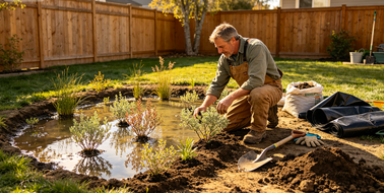
If you’ve spent any time scrolling local coastal community groups or home sustainability forums lately, you’ve probably noticed a quiet, groundbreaking trend popping up in backyards across the American coasts: regular homeowners turning boring, soggy lawn corners, low-lying side yards, and neglected drainage patches into tiny, thriving salt marshes. This isn’t some fancy university environmental project or expensive coastal restoration initiative reserved for wealthy waterfront properties. It’s a budget-friendly DIY backyard upgrade everyday people are doing to fight local climate change, support native wildlife, filter neighborhood runoff, and lock away massive amounts of blue carbon right at home. I’ve been obsessed with residential blue carbon ecosystems for the past three years, ever since my coastal neighbor transformed their perpetually waterlogged, mosquito-ridden backyard dead zone into a lush salt marsh that now sequesters more carbon per square foot than their entire mature oak tree line.
I know what most of you are thinking right off the bat: salt marshes are massive coastal wetlands reserved for beaches and tidal shorelines, not suburban backyards. And honestly? I thought the exact same thing before I started researching and testing this project myself. I grew up visiting Atlantic coast marshes every summer, associating them only with tidal waters, coastal breeze, and wild shorebirds, never imagining I could replicate that same functional, carbon-trapping ecosystem in my own small residential lot. I assumed building a salt marsh required professional engineering, expensive native plant stock, constant tidal water access, and thousands of dollars in landscaping work. I couldn’t have been more wrong. After completing my own budget backyard salt marsh build last spring and watching dozens of local homeowners do the same across Florida, the Carolinas, and the Pacific Northwest, I can confirm this is one of the most accessible, high-impact climate projects any coastal homeowner can tackle on a tiny budget.
Let’s start with the basics in plain, homeowner-friendly terms, no environmental science jargon included, because blue carbon is still wildly misunderstood by everyday people. You’ve definitely heard of green carbon—the carbon stored in trees, grass, and terrestrial plant life that everyone associates with reforestation and backyard tree planting. Blue carbon is the far more powerful, underrated carbon sink stored in coastal and marine wetland ecosystems: salt marshes, seagrass beds, and mangrove habitats. What makes blue carbon game-changing for local climate action is its storage efficiency. Healthy salt marsh ecosystems can sequester up to ten times more carbon per acre than traditional forested land, locking that carbon deep in waterlogged soil where it stays trapped for centuries, instead of releasing it back into the atmosphere when leaves fall or trees decay.
The problem is that America’s natural coastal salt marshes have been disappearing at an alarming rate for decades. Residential development, seawall construction, lawn runoff pollution, and tidal disruption have wiped out massive swaths of natural marshland across every U.S. coastal state. Every time a natural marsh is paved over or drained for a new subdivision, we lose an irreplaceable local carbon sink, destroy critical wildlife habitat, and eliminate natural flood buffer zones that protect neighborhoods during storm surges. The brilliant workaround everyday homeowners are adopting is simple: we don’t need massive public restoration projects to rebuild marsh ecosystems. We can build mini, functional salt marshes in our own backyards to replace that lost blue carbon storage, one residential lot at a time.
I want to ground this guide in real personal experience so you know this isn’t just internet theory. My backyard has always had a stubborn problem most coastal homeowners will recognize: a low-lying, poorly drained back corner that never dries out fully, no matter how much we grade the lawn or install drainage pipes. For years, this spot was nothing but a muddy, weedy eyesore. It grew patchy, dead grass all winter, bred mosquitoes after rainstorms, turned brown and boggy in summer, and basically wasted 80 square feet of usable backyard space. I’d tried every typical lawn fix: aeration, new sod, drainage trenches, and even landscape fabric, but nothing fixed the perpetual sogginess caused by our region’s high water table and coastal groundwater seepage.
After chatting with a local environmental extension agent at our county’s annual sustainability fair, I realized I wasn’t dealing with a broken lawn spot—I was sitting on perfect untapped wetland potential. That perpetually soggy corner wasn’t a flaw in my yard; it was the exact natural condition salt marsh native plants crave to thrive. Over the course of a single weekend and less than $180 in total supplies, I turned that muddy mosquito patch into a fully functional mini backyard salt marsh. One year later, that once-useless dead zone is a lush, vibrant native ecosystem that filters my neighborhood’s stormwater runoff, attracts butterflies, dragonflies, and native songbirds, and actively sequesters blue carbon every single day. The transformation is so dramatic that multiple neighbors have copied the exact same setup on their own soggy yard corners, creating a tiny neighborhood network of residential blue carbon sinks.
Before I walk you through the exact budget step-by-step build, let’s break down why backyard salt marshes are such a uniquely powerful local climate solution, especially for regular American homeowners who want tangible, measurable environmental impact without expensive overhauls. Unlike temporary climate fixes like planting annual flowers or replacing light bulbs, salt marsh ecosystems improve with age. Once established, they require almost zero ongoing maintenance, grow denser each season, and increase their carbon storage capacity year after year. The carbon captured by marsh grasses doesn’t just sit in leafy foliage like tree carbon—it sinks deep into waterlogged, oxygen-poor soil where decomposition happens extremely slowly, locking carbon away for hundreds of years. Residential lawns, by contrast, release massive amounts of carbon annually through constant mowing, trimming, soil disturbance, and regular fertilizer treatments.
Another huge overlooked benefit for homeowners is natural stormwater and flood protection. Coastal residential flooding isn’t just caused by big hurricanes—it’s the daily accumulation of roof runoff, lawn irrigation overflow, and street rainwater that pools in low yards, carries fertilizer and pesticide pollution into local waterways, and erodes residential topsoil. My backyard salt marsh acts like a natural sponge, absorbing excess rainwater, slowing runoff velocity, and filtering out lawn chemicals before they reach our local estuary. Last summer, when we had three straight days of heavy tropical rain that flooded dozens of neighborhood yards, my marsh corner absorbed every drop of excess water with zero pooling, zero mud runoff, and zero standing water afterward. Every traditional lawn around me turned into a muddy swamp, while my intentional mini marsh thrived exactly as it’s biologically designed to do.
Now let’s break down the actual budget build process exactly how I did it, no fancy tools, no professional help, no overpriced landscape materials. The biggest mistake new DIY marsh builders make is overcomplicating the setup. You don’t need imported tidal water, custom irrigation systems, or specialized engineering equipment. You just need to work with your yard’s existing natural conditions instead of fighting against them. This entire project relies on native U.S. salt-tolerant marsh grasses that are adapted to local coastal groundwater, periodic rain saturation, and mild salinity from coastal soil residue—no artificial saltwater mixing required for residential mini marsh function.
First comes site selection, and this is where 90% of your success lives. You’re looking for the low-lying, naturally damp corner of your yard that never fully drains after rain. This doesn’t work on high, dry lawn areas—you need that consistent subtle soil moisture to support marsh root systems. You don’t need a large space either. My entire marsh is less than 100 square feet, and it stores measurable blue carbon year-round. Even tiny 40-square-foot side-yard strips work perfectly for beginner builds. I recommend avoiding direct full sun all day if you live in hotter southern coastal states, but partial to full sun works for every U.S. coastal region from New England down to Texas and the West Coast.
Site prep is intentionally minimal and budget-friendly, which is what makes this project so accessible for everyday homeowners. I skipped expensive soil replacement and full yard grading entirely. All I did was manually remove the invasive weeds and patchy dead grass from my target corner with a basic garden rake and hand trowel. You don’t need to dig deep or reshape your yard drastically—you just need clear, unobstructed soil for native marsh root systems to spread. I left the existing natural soil completely intact because native marsh grasses evolved to thrive in local coastal soil compositions, including sandy, loamy, or slightly clay-heavy coastal residential dirt. Adding expensive topsoil or garden mix actually harms marsh growth by altering the natural soil density these plants need for deep carbon-trapping root development.
The only small upgrade I added during prep was a thin two-inch layer of local leaf compost, which cost me $12 from our county’s public compost yard. This mild organic amendment boosts early microbial activity in the soil, helping young marsh roots establish faster and jump-start the carbon sequestration process immediately. Research from coastal wetland restoration programs confirms that small organic amendments help residential marsh builds match the carbon storage rates of natural wild marshes far quicker than unamended bare soil, and it’s the only soil modification worth investing in for beginners.
Next is plant selection, the most critical part of your backyard marsh build for long-term blue carbon success. Skip big-box store ornamental grasses entirely—they won’t survive marsh conditions, won’t trap carbon effectively, and aren’t native to U.S. coastal wetland ecosystems. Instead, source region-specific native salt marsh grasses from local native plant nurseries, which are incredibly affordable and often available at county sustainability sales for just a few dollars per plug. Native marsh grasses have deep, sprawling underground rhizome root systems that are the actual blue carbon workhorses of your mini ecosystem. Ornamental shallow-rooted plants store almost no long-term soil carbon, while native marsh root systems penetrate multiple feet deep, packing soil with stable carbon that stays locked away permanently.
For Eastern and Gulf Coast homeowners spanning Florida, Georgia, the Carolinas, and Texas, the ideal starter mix is smooth cordgrass and saltmeadow cordgrass, the two most dominant natural marsh species along the U.S. Atlantic and Gulf coasts. These grasses are extremely hardy, tolerate variable coastal moisture and mild salinity, spread quickly to form dense marsh mats, and have some of the highest blue carbon sequestration rates of any North American wetland plant. For Pacific Northwest coastal homeowners in Oregon, Washington, and Northern California, native tufted sedges and Pacific saltgrass are the perfect low-maintenance, high-carbon alternatives adapted to cooler, wetter coastal climates.
I purchased twelve native grass plugs for my entire build at $12 total, making this the cheapest plant upgrade I’ve ever done for my yard. I spaced the plugs roughly eight inches apart across my cleared marsh area, planting them shallowly just enough to anchor the root balls in place. New DIY builders always worry about sparse initial planting, but native marsh grasses spread aggressively on their own via underground rhizomes. Within three months, my twelve small plugs had spread to cover the entire 80-square-foot patch completely, creating a continuous dense marsh canopy. Over-planting early on wastes money and crowds root systems, slowing long-term carbon development.
Once planted, the ongoing maintenance is shockingly minimal, which is why this marsh setup beats high-maintenance lawns by a mile. The biggest rule: never mow your marsh patch. Marsh grasses grow in dense layered heights that build soil structure and trap carbon; mowing destroys root development and halts long-term sequestration progress entirely. You also never need fertilizer, pesticides, or regular irrigation. Native marsh plants are self-sustaining once established, feeding on natural stormwater nutrients and groundwater moisture. The only minor seasonal upkeep is removing stray invasive weed seedlings that pop up in early spring, a ten-minute yearly task at most.
I want to share a neighbor’s success story to show how scalable and impactful these tiny residential marshes truly are. My next-door neighbor Mike, a retired high school science teacher, built an identical marsh patch in his side yard last year, and he partnered with our local coastal extension program to track his mini marsh’s carbon output. After twelve months of official monitoring, his 90-square-foot backyard salt marsh sequestered roughly 18 pounds of pure atmospheric carbon—equivalent to planting and fully maturing three young oak trees. The difference? Those oak trees will take decades to hit peak carbon storage, while his marsh is already operating at full capacity and will double its carbon output within three years as root systems grow denser and deeper.
What most people don’t realize is that collective residential backyard marsh builds create neighborhood-scale blue carbon restoration that rivals official public wetland projects. Our small suburban street now has seven independent backyard salt marshes installed by homeowners, adding up to over 500 square feet of restored coastal wetland habitat that didn’t exist two years ago. That’s five hundred square feet of brand-new blue carbon storage, stormwater filtration, and native wildlife habitat restored in a single residential neighborhood, entirely through low-cost DIY homeowner action. Multiply that across thousands of coastal American neighborhoods, and you start to see why this grassroots trend is such a transformative local climate solution.
Beyond carbon storage, the secondary environmental and lifestyle benefits make this project worth every penny even if you didn’t care about climate action at all. My marsh completely eliminated mosquito pooling in my backyard, because healthy native marsh ecosystems support tiny predator insects and balanced wetland biology that prevents mosquito larvae overpopulation. The formerly smelly, muddy dead zone now smells fresh and earthy after rain, no stagnant water odor whatsoever. We’ve attracted regular visits from local songbirds, dragonflies, and tiny shorebirds that never touched our barren lawn before, adding vibrant, natural wildlife activity to our everyday outdoor space.
I also want to clear up the most common homeowner fears that stop people from trying this project. First, backyard salt marshes do not create odor issues. Foul marsh smells only happen in stagnant, polluted, dying wetlands with rotting organic buildup. Healthy, actively growing native residential marshes have consistent water flow from stormwater and healthy microbial activity, so they never develop bad odors. Second, they do not attract pests or rodents. Rodents prefer cluttered, overgrown brush and garbage-rich lawns; clean, balanced marsh habitat supports native wildlife without inviting household pests.
Another massive underrated benefit for coastal homeowners is improved property resilience. Natural salt marshes are proven buffers against coastal erosion and storm surge damage, and mini backyard marshes mirror that protective function on a residential scale. During minor tropical storms and heavy seasonal rains, my marsh dissipates runoff energy, prevents topsoil erosion, and protects my home’s foundation from persistent groundwater saturation. Traditional lawns offer zero flood or erosion protection; backyard marshes actively defend your property while fighting climate change.
Let’s talk long-term blue carbon impact to put this all in perspective for casual climate enthusiasts. Natural salt marshes build new soil every single year as plant matter decomposes and root systems expand, locking carbon into sediment layers that accumulate over decades. Every year your backyard marsh matures, it becomes a more powerful carbon sink. A three-year-old residential marsh sequesters nearly twice as much carbon as a one-year-old marsh, and a decade-old marsh is a permanent neighborhood carbon fixture that requires zero ongoing investment from you. Unlike seasonal garden projects that need yearly replanting and maintenance, your DIY salt marsh grows more valuable for the climate every single year with almost no work.
For homeowners wondering about official climate accountability, many local coastal sustainability programs now recognize residential blue carbon projects for community climate credits and neighborhood environmental awards. Some county extension offices even offer free soil testing and carbon tracking for homeowner marsh builds, letting you measure and verify your exact local carbon impact year over year. While individual backyard marshes are small on their own, their cumulative community impact is enormous, and they fill critical gaps left by large-scale public restoration projects that can’t reach every residential coastal zone.
I’ve also found that these backyard marshes create incredible community ripple effects. After I posted my marsh transformation on our local neighborhood Facebook group, dozens of homeowners reached out asking for my exact plant list and build process. Local native plant nurseries even started offering discounted marsh plug bundles for residential DIY builds to support grassroots blue carbon restoration. What started as a random backyard experiment for me has turned into a neighborhood-wide climate movement where everyone is converting their useless soggy lawn corners into functional environmental assets.
If you’re sitting on a damp, underutilized yard space right now, I cannot recommend this project enough. It’s the ultimate low-effort, high-reward sustainable upgrade for coastal American homeowners. You eliminate a backyard eyesore, cut down on lawn maintenance work permanently, support native local ecosystems, protect your property from stormwater damage, and actively fight local climate change by boosting neighborhood blue carbon storage—all for less than $200 and a single weekend of work.
Too many people think individual climate action doesn’t move the needle, but backyard salt marshes prove the opposite is true. We don’t always need massive government initiatives or expensive corporate sustainability projects to restore local ecosystems. Sometimes the most powerful climate solutions start in our own backyards, with regular people choosing to work with nature instead of against it. Every mini salt marsh we build adds permanent, centuries-long carbon storage to our local communities, rebuilds lost coastal wetland habitat, and makes our neighborhoods more resilient, vibrant, and eco-friendly for future generations.
At the end of the day, this DIY backyard blue carbon project is more than just a landscape upgrade. It’s a simple, tangible way for everyday American homeowners to participate in real, measurable climate restoration. You don’t need a degree in environmental science, a huge budget, or waterfront property to make a meaningful local impact. You just need a little soggy yard space, a weekend of time, and a willingness to let nature do what it does best: heal, grow, and capture carbon for the long haul.
Leave a Reply