
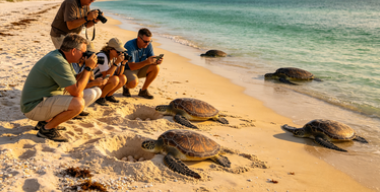
If you’ve ever spent any real time living along Florida’s East Coast, you know the biggest travel secret no tourist brochure will ever tell you: the iconic sea turtle sightings aren’t happening at the crowded, parking-packed public beaches everyone flocks to every summer. The massive nesting loggerheads, gentle green sea turtles, and rare Kemp’s ridleys that call our Atlantic coastline home stick to the quiet, unmarked stretches of shoreline where human noise and foot traffic vanish after dark. For over a decade, I’ve lived right on this coast, splitting my weekends between late-night turtle watches, early morning nest patrols with local conservation groups, and casual sunset shore walks where wild turtles glide through shallow surf completely unbothered. I’ve learned firsthand that the best turtle viewing spots aren’t advertised, aren’t lined with boardwalks, and definitely don’t show up on TikTok trending travel lists—they’re local-only hidden gems passed down through neighborhood groups, lifelong coastal families, and seasoned Florida beach regulars.
I’m writing this guide today because I’m tired of watching out-of-state visitors waste entire summer evenings crammed onto busy tourist beaches, hoping to spot a single turtle nest or a nesting mother, only to leave disappointed and empty-handed. Last month, I ran into a family from Ohio at a packed Daytona Beach access point at 10 p.m., waiting in a crowd of 50+ people with bright phone flashlights, asking if we’d seen any turtle activity. I told them the truth no one tells tourists: you’ll almost never see active wild turtle nesting or consistent daytime turtle sightings at these high-traffic public beaches. Wild sea turtles are incredibly skittish, hypersensitive to light, noise, and human disturbance, and they actively avoid crowded shorelines to lay their eggs and feed. The good sightings? They happen in the quiet, overlooked pockets of the coast only locals know about.
This isn’t a generic tourist guide filled with overhyped state parks and commercial turtle watch tours. Every single spot I’m sharing is a resident-approved hidden viewing location, tested repeatedly by myself, my coastal neighbors, and local marine conservation volunteers. I’m breaking down exactly when to go, how to behave, what you’ll see, and why these quiet shorelines outperform every popular tourist beach for wild turtle encounters. I’m also including all the unwritten local rules, common beginner mistakes, and real-life stories of my own craziest turtle sightings to make this guide feel like a friend giving you the insider scoop, not a sterile travel article. By the end, you’ll have a curated list of low-crowd, high-success Florida East Coast turtle spots that let you witness these incredible wild creatures in their natural habitat without disrupting their fragile nesting and feeding cycles.
Before we dive into the hidden spots, let’s start with the most critical local knowledge every turtle watcher needs to understand—no fancy marine biology degree required, just real coastal common sense. Florida’s East Coast sea turtle season runs officially from May 1 through October 31 every single year, and this narrow window is when 99% of nesting activity happens. Nighttime is nesting time: mother turtles crawl ashore under the cover of darkness to dig nests, lay eggs, and cover their clutches before returning to the ocean before sunrise. Daytime sightings are almost exclusively juvenile and adult turtles feeding in shallow seagrass flats and calm shoreline waters, which means different spots work for different times of day. Most tourists mix this up entirely, showing up midday hoping to see nesting turtles and showing up at night at busy beaches hoping for active sightings, setting themselves up for failure every single time.
I also need to lay out the non-negotiable local turtle etiquette rules upfront, because responsible viewing is the only way we keep these hidden spots wild and accessible for years to come. Wild Florida sea turtles are federally protected endangered species, and even small accidental disturbances can destroy entire nests or scare mothers away from nesting permanently. No bright flashlights, no phone flashes, no flash photography—red filtered lights only for after-dark walks. No approaching turtles, no touching nests, no blocking shoreline access, no sitting or walking on dry nesting dunes. I’ve seen well-meaning tourists accidentally ruin entire nesting seasons at hidden local spots by breaking these simple rules, which is why local communities guard these quiet shorelines so closely. This guide is built on respectful, low-impact viewing, and every spot I share relies on visitors following these unspoken coastal ground rules to keep the turtles coming back year after year.
Let’s start with my personal favorite hidden nesting spot on the entire upper Florida East Coast, a tiny unmarked beach access just north of St. Augustine that only lifelong locals and conservation volunteers know exists. Most tourists flood St. Augustine Beach and Vilano Beach, fighting for parking and crowding every shoreline access point, completely unaware that a quiet residential stretch of shoreline off a small side road hosts some of the densest loggerhead nesting activity in Northeast Florida. There’s no official parking lot here, no welcome sign, no boardwalk, no public restrooms—just a small gravel roadside pull-off that fits roughly six cars max, leading down a short sandy path to an untouched stretch of quiet dune beach.
I found this spot three years ago through my neighbor Linda, a retired marine biologist who’s volunteered with St. Augustine’s sea turtle patrol for over 20 years. She took me here on a late June night at 11 p.m., a time most tourists are already back at their hotels, and we witnessed three separate loggerhead mothers nesting within a two-hour window. I still remember the quiet magic of that night perfectly: the soft crash of distant waves, zero human chatter, only the faint rustle of dune grass and the slow, deliberate movement of a massive 250-pound loggerhead dragging herself up the sand to dig her nest. In three years of visiting this spot consistently during turtle season, I’ve never seen more than a handful of other people here, and the nesting success rate here is exponentially higher than any crowded public beach nearby.
What makes this northern St. Augustine hidden stretch so perfect for turtles is its undisturbed dune structure and minimal light pollution. Unlike tourist beaches lined with bright streetlights, beachfront restaurants, and neon signage, this residential shoreline is tucked away behind low-slung coastal homes with dark curfew lighting after 10 p.m. Turtles rely on dark, quiet shorelines to feel safe enough to nest, and this pocket of coast checks every single box. For viewers, the best window here is 11 p.m. to 2 a.m., on low-wind, low-moon nights. Bright full moons actually make turtles more skittish, while overcast, dark summer nights create perfect nesting conditions. I’ve brought several out-of-town friends here, and every single one has left speechless after witnessing a wild nesting loggerhead in complete undisturbed natural conditions.
Moving south to the central Florida coast, the absolute best hidden daytime turtle viewing spot for feeding juvenile and adult turtles is a little-known shoreline stretch just south of New Smyrna Beach, far from the crowded New Smyrna tourist hubs. Most visitors stick to the main New Smyrna Beach driving shoreline, packed with cars, surfers, and beachgoers from sunrise to sunset, but locals drive five minutes further south to a quiet county-managed shoreline access with shallow, crystal-clear seagrass flats that act as a natural turtle feeding ground year-round. This spot doesn’t cater to tourists at all—there’s no gift shop, no snack bar, no lifeguard stand, just a small paved parking lot and a short walk to calm, shallow coastal waters teeming with marine life.
This is my go-to morning turtle spot, perfect for anyone who doesn’t want to stay up late for nighttime nesting views. I visit here every Sunday morning during summer season, arriving right at sunrise between 6 and 7 a.m., and I can almost guarantee spotting multiple green sea turtles gliding through the shallow seagrass, grazing on aquatic vegetation completely unbothered by human presence. The water here is incredibly shallow, rarely reaching past knee level for 100+ yards offshore, so you can stand quietly on the sandbar and watch turtles swim and feed just a few feet away without disturbing them. Last summer, I brought my 12-year-old cousin here, and we watched a juvenile green turtle float lazily through the grass for nearly 20 minutes, completely unfazed by our quiet observation.
The reason this spot works so well for daytime sightings is its protected cove structure. The shoreline is sheltered by a natural rock jetty that calms wave action, creating still, clear water that lets you spot turtles from the shore easily. The consistent seagrass beds here provide reliable food sources, so turtles return daily to feed, especially during early morning hours before boat traffic and beach activity picks up. Local anglers and conservation volunteers know this spot well, but tourists never find it, keeping the water quiet and the turtle activity consistent all season long. If you prefer relaxed daytime wildlife viewing over late-night nesting watches, this central Florida hidden gem is unbeatable.
For mid-coast Florida nesting magic, my favorite local secret is a quiet stretch of shoreline in northern Brevard County, just far enough away from busy Cocoa Beach and Cape Canaveral tourist crowds to remain completely untouched. Cocoa Beach’s main shorelines are flooded with visitors year-round, with constant light pollution and foot traffic that pushes nesting turtles miles away from popular access points. But this unmarked Brevard County residential beach stretch is a local turtle patrol hotspot, with some of the highest nest density rates on the entire East Coast. Local volunteers monitor this shoreline every night during season, and they’re always happy to educate respectful visitors who follow the quiet viewing rules.
I’ve volunteered on nest patrols here multiple times, and the experience is wildly different from tourist-facing turtle events. On a typical July night, we’ll patrol the quiet shoreline and find fresh nest digs, active nesting mothers, and newly hatched baby turtle tracks leading from the dunes to the water. One of my most memorable Florida turtle moments happened here last year: we watched a newly hatched clutch of tiny baby turtles emerge from a nest at 1 a.m., crawling in a straight silent line across the sand into the gentle surf under a completely dark sky. There were no crowds, no noise, no flashlights—just a small group of local volunteers and two respectful visitors witnessing one of nature’s most beautiful natural rituals in pure quiet. That’s the kind of intimate, unspoiled turtle experience you can never get at a commercial tourist beach.
South Florida’s best hidden turtle spot is a quiet barrier island shoreline in southern Palm Beach County, away from the glitzy crowded beaches of West Palm and Boca Raton. Most South Florida tourists assume all local beaches are packed and overdeveloped, but this small residential barrier island has preserved wild dune habitats, minimal shoreline lighting, and almost no after-dark foot traffic. It’s a little-known fact among visitors but common local knowledge: South Florida’s southern East Coast hosts rare Kemp’s ridley sea turtle nesting activity, the most endangered sea turtle species on the planet, and this quiet stretch is one of their most consistent hidden nesting grounds.
I only found out about this spot two years ago from a local fisherman who’s fished these waters for 30 years. He told me he regularly spots Kemp’s ridleys nesting here on low-light summer nights, a rare sight most Florida locals never even witness. I’ve visited three times during peak late-season nesting in August and September, and I’ve been lucky enough to spot two separate Kemp’s ridley nesting events, alongside dozens of loggerheads and green turtles. What makes this spot so special is its rarity—you’re not just seeing common sea turtles here, you’re witnessing endangered species activity that most wildlife travelers spend years chasing.
Beyond specific spot locations, I want to share the local pro tips that will drastically improve your turtle viewing success anywhere along the Florida East Coast, tricks I’ve learned from decades of coastal living and conservation work. First, always prioritize weekday visits over weekends. Weekend shorelines, even hidden ones, see exponentially more local foot traffic, boat activity, and noise, which scares turtles away. Weeknights and weekday mornings offer drastically higher sighting rates with minimal human disturbance. Second, chase overcast dark nights for nesting views. Clear bright nights with full moon illumination make turtles hesitant to nest, while cloudy, dim nights create perfect safe conditions for mother turtles to come ashore.
Third, always arrive early and stay completely still. Turtles are incredibly sensitive to movement and vibration. If you’re walking along the shoreline constantly, talking loudly, or shifting positions frequently, you’ll never spot active nesting. Local turtle watchers find a quiet spot to sit on the wet sand far from dune nesting zones, turn on their red lights low, and wait patiently for activity. I’ve seen countless tourists walk back and forth for hours and see nothing, while locals sitting quietly for 30 minutes witness multiple turtle events. Patience is the single biggest difference between successful viewing and going home empty-handed.
I also want to debunk the most common tourist turtle viewing myths that waste people’s entire Florida beach seasons. The biggest myth is that you need paid guided tours to see wild turtles. Paid tours are great for education, but they always operate in high-traffic public zones with lower turtle activity. All the best wild sightings I’ve ever had have been self-guided quiet visits to local hidden shorelines, following proper etiquette and timing. The second myth is that summer afternoons are prime nesting time. Nesting almost never happens before 10 p.m.—mother turtles wait for full dark to avoid predators and human disruption, so afternoon beach visits will never yield nesting sightings.
Another critical local tip is learning to read turtle tracks before you see a turtle itself. Experienced local viewers can spot fresh nesting tracks in the sand within minutes of arriving at a beach. Loggerhead tracks are wide, symmetrical, with distinct flipper marks leading straight up to dune nesting spots, while green turtle tracks are narrower and more irregular. Fresh tracks mean a turtle was recently ashore or is actively nesting nearby, letting you adjust your viewing spot accordingly. I teach all my out-of-state friends this simple trick, and it instantly boosts their chances of successful sightings without disturbing any wildlife.
I also want to emphasize why protecting these hidden local spots matters more than most people realize. Florida’s East Coast sea turtle populations have slowly recovered over the past few decades thanks to strict conservation rules and local volunteer efforts, but they’re still incredibly fragile. Every quiet unmarked beach we keep wild doubles as critical nesting habitat that offsets the loss of crowded tourist shorelines. When visitors follow local etiquette, stay quiet, avoid lights, and leave no trace, they help preserve these spots for future turtle generations and future wildlife viewers alike. Local residents guard these hidden beaches not to gatekeep beauty, but to protect the fragile turtle populations that depend on undisturbed shoreline habitat to survive.
One of my favorite local turtle viewing traditions is late-season baby turtle watching in September and October. Most tourists leave Florida before the end of turtle season, missing the magical hatchling emergence period entirely. All the hidden spots I’ve shared host regular baby turtle hatches in early fall, with tiny hatchlings emerging from nests at night and crawling toward the ocean under the moonlight. I’ve spent multiple September nights sitting quietly on the sand watching dozens of baby turtles make their first journey to the water, a gentle, unforgettable experience that feels far more intimate than any crowded summer viewing event.
If I had to pick one universal mistake new turtle watchers make, it’s overcrowding small hidden access points. These local spots work precisely because they have minimal human traffic. If every visitor brings a large group, talks loudly, or lingers in nesting zones, these quiet beaches will quickly become as disturbed as tourist hotspots, and the turtles will leave for good. As local viewers, our unspoken rule is simple: come alone or with one other person, stay quiet, keep lights dim, observe from a distance, and leave the beach exactly as you found it. It’s a small effort that preserves massive wildlife value.
After years of exploring every corner of Florida’s East Coast shoreline, chasing turtle sightings from St. Augustine down to southern Palm Beach County, I can confidently say the best wildlife viewing moments are never found on trending tourist lists. They’re found in the quiet, unassuming, community-guarded pockets of coast where nature still operates undisturbed, where locals prioritize conservation over crowds, and where wild turtles feel safe enough to nest, feed, and thrive. These hidden spots aren’t just beautiful beach locations—they’re critical sanctuaries for some of the ocean’s most endangered creatures, and they offer viewers a rare chance to connect with wild marine life in its purest natural form.
Whether you’re a Florida local looking to explore your own coastline differently, a seasonal visitor tired of crowded tourist beaches, or a wildlife lover chasing authentic sea turtle encounters, these resident-approved hidden spots will completely change how you experience Florida’s famous turtle season. You don’t need expensive tours, fancy equipment, or exclusive access to witness wild sea turtles in their natural habitat. You just need local insider knowledge, patience, respect for wildlife, and a willingness to trade crowded beach chaos for quiet coastal magic. The Florida East Coast’s most incredible turtle sightings are hiding in plain sight—you just have to know where to look, and how to watch gently enough to let the wild turtles stay.
Leave a Reply