
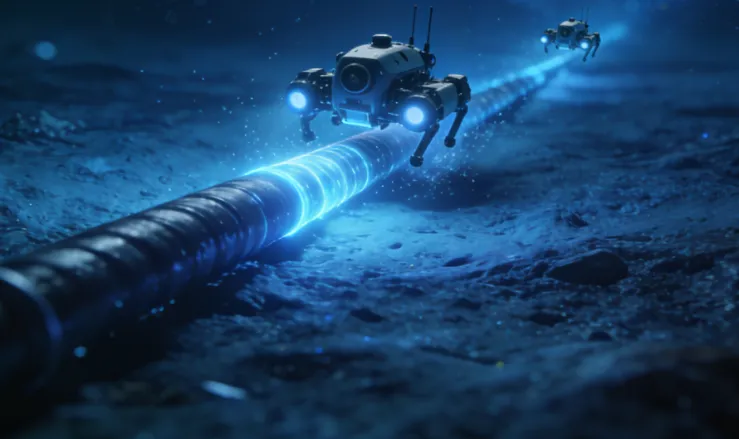
If you’re reading this article right now, scrolling through your favorite blog, streaming a show, or video-calling a friend across the Atlantic, there’s a 95% chance the data powering that action is traveling through an invisible network beneath the ocean’s surface: subsea cables. These undersea fiber-optic lines are the unsung heroes of the digital age—they carry everything from our social media posts and work emails to global financial transactions and military communications. Yet, for all their importance, most of us never think about them… until something goes wrong.
As a European-American blogger who’s spent years covering tech and global security, I’ve grown obsessed with these underwater lifelines. They’re not just pieces of cable buried in the seabed—they’re the backbone of our interconnected world. But here’s the harsh truth: the deep ocean is a brutal environment, and these cables face constant threats—from natural disasters and accidental damage to deliberate, malicious attacks. The good news? The same cutting-edge deep-sea exploration technology that’s unlocking the mysteries of the Mariana Trench is now our best defense in protecting these critical assets. Today, we’re diving deep (pun intended) into how deep-sea tech keeps our subsea cables running—and how we’re fighting back against the growing risk of deep-sea cyberattacks.
First: Why Subsea Cables Matter (More Than You Think)
Let’s start with the basics, because understanding their importance is key to grasping why we’re investing billions in protecting them. When you send a text to someone in London from New York, or stream a movie hosted on a server in Frankfurt, your data doesn’t go through satellites (well, almost never). Satellites are slow, expensive, and can’t handle the massive volume of data we generate every day. Instead, 95% of all intercontinental internet traffic is carried by subsea cables—over 570 of them, spanning more than 1.3 million kilometers across every ocean, as of 2025.
These cables are marvels of engineering: thin, fiber-optic strands wrapped in protective layers of steel, plastic, and insulation, designed to withstand extreme pressure (up to 1,000 times atmospheric pressure in the deepest parts of the ocean), freezing temperatures, and corrosive saltwater. A single modern subsea cable can carry terabits of data per second—enough to support millions of simultaneous video calls. For countries, they’re even more critical: the EU relies on around 250 active cables to stay connected to the global internet, while the U.S. has over 90 registered or planned cables, making it the most interconnected nation in the world.
But here’s the problem: these cables are surprisingly vulnerable. Every year, there are 150-200 accidental or unintentional damages globally—most caused by fishing vessels (bottom trawling can damage cables up to 2,000 meters deep) or ship anchors, especially in shallow waters. Add in natural threats like earthquakes, volcanic eruptions, and strong ocean currents, and you have a recipe for frequent outages. And then there’s the biggest threat of all: deliberate attacks. In recent years, incidents in the Baltic Sea and the Red Sea have raised alarms—cables cut or damaged in ways that suggest sabotage, not accident, as geopolitical tensions spill into the deep ocean.
A single cable outage can cost billions. In 2024, a series of cable cuts in the Red Sea disrupted communication between Asia, Europe, and the Middle East, crippling businesses that rely on real-time data and costing the global economy an estimated $500 million in lost productivity. For small island nations or countries with limited cable connections, an outage can mean days or even weeks without reliable internet—a disaster for education, healthcare, and commerce.
This is where deep-sea exploration technology comes in. The tools we use to map the ocean floor, study marine life, and explore sunken ships are now being repurposed to monitor, maintain, and protect these vital cables. Let’s break down how.
Deep-Sea Exploration Tech: The Unsung Guardians of Subsea Cables
For decades, maintaining subsea cables was a slow, costly, and risky process. If a cable broke, engineers would have to send a specialized ship to the area, drag the cable to the surface, repair it, and lower it back down—often taking weeks and costing millions of dollars. But today, thanks to advances in deep-sea exploration tech, we’re moving from a “react and repair” model to a “predict and protect” model. Here are the key technologies making this possible:
1. Remotely Operated Vehicles (ROVs): The Deep-Sea Mechanics
If you’ve ever watched a documentary about deep-sea exploration, you’ve seen ROVs—unmanned submersibles controlled by operators on a surface ship, connected by a thick cable that carries power and data. These are the workhorses of subsea cable maintenance. Unlike human divers, ROVs can dive to depths of 4,000 meters or more, withstand extreme pressure, and work around the clock without fatigue.
Modern ROVs used for cable maintenance are equipped with high-definition 4K cameras, advanced sensors, and hydraulic robotic arms that can perform delicate tasks—like cutting damaged cable, splicing fiber-optic strands, and burying cables deeper into the seabed to protect them from anchors or trawlers. For example, the FCV4000, a heavy-duty ROV developed by CNOOC, can operate at 4,000 meters, with a 95% precision rate in underwater operations—critical for repairing cables in the deepest parts of the ocean.
ROVs are also used for routine inspections. Operators guide them along the length of a cable, using their cameras and sensors to check for signs of wear, damage, or corrosion. If they spot a problem—like a cable that’s become exposed due to shifting sediment—they can fix it on the spot, burying the cable with a specialized plow or securing it with weights. This proactive maintenance reduces the risk of outages by catching issues before they become major problems.
In Europe, companies like Orange and Telefónica use ROVs to monitor their cable networks in the Mediterranean and Atlantic, while in the U.S., SubCom (a leading cable manufacturer) relies on ROVs to maintain its transatlantic cables. These tools have cut repair times in half—what once took weeks now takes days, minimizing downtime and cost.
2. Autonomous Underwater Vehicles (AUVs): The Deep-Sea Scouts
While ROVs are great for hands-on maintenance, AUVs are the scouts of the deep. These are unmanned, untethered submersibles that can operate independently for hours or even days, mapping the ocean floor and collecting data without human intervention. For cable maintenance, AUVs are used to map the seabed before a cable is laid, identifying potential hazards like rocks, shipwrecks, or areas with strong currents that could damage the cable.
But their real value comes in routine monitoring. AUVs equipped with side-scan sonar and magnetic sensors can patrol large stretches of cable, creating detailed maps of the seabed and detecting any changes—like a new rockslide, a shifted cable, or even a foreign object (like an anchor) near the cable. Some AUVs are even equipped with artificial intelligence (AI) that can analyze the data in real time, alerting operators to potential threats before they cause damage.
The EU’s Joint Research Centre (JRC) has been testing AUVs in the Baltic Sea, where recent cable incidents have raised concerns about security. These AUVs can cover hundreds of kilometers of cable in a single mission, providing continuous monitoring that would be impossible with ships or ROVs alone. In the U.S., the Navy uses AUVs to monitor cables near sensitive military facilities, ensuring that any tampering is detected immediately.
3. Advanced Sensing and Monitoring Systems: The Early Warning Network
Deep-sea exploration has also led to breakthroughs in sensing technology, which is now integrated directly into subsea cables themselves. Enter “SMART cables”—science monitoring and reliable telecommunications cables that include scientific instruments along their length, measuring temperature, pressure, seismic activity, and even ocean currents. These sensors don’t just help scientists study the ocean—they also provide critical data about the cable’s environment.
For example, if a SMART cable detects a sudden increase in pressure or seismic activity, it can alert operators to a potential earthquake or underwater landslide, allowing them to prepare for possible damage. Similarly, sensors can detect changes in temperature or corrosion, indicating that the cable’s protective layers are wearing thin. This real-time data allows operators to address issues before they lead to a break.
Companies like NEC have developed advanced monitoring systems that integrate data from SMART cables, ROVs, and AUVs into a single platform. Their Web NSV Unified Management System (UMS) allows operators to monitor entire cable networks from a single dashboard, crossing traditional management barriers to gain a holistic view of network health. This unified approach is critical as cable networks become more complex, with mesh-type configurations and multiple branching points using OADM (Optical Add/Drop Multiplexing) technology.
Another key sensing technology is OTDR (Optical Time-Domain Reflectometry), which is used to locate faults in fiber-optic cables. OTDR sends a laser pulse through the cable and analyzes the scattered and reflected light, allowing engineers to pinpoint the exact location of a break—with precision up to ±1 meter, regardless of water depth. This technology has revolutionized fault detection: in one project, OTDR located a 2,000-meter deep cable break in just 30 minutes, saving valuable time in repairs.
4. Deep-Sea Mapping Tech: The Blueprint for Protection
You can’t protect what you don’t map. That’s why deep-sea mapping technology—originally developed for oceanographic research—is now a critical tool for cable maintenance. Using multibeam sonar, LiDAR, and satellite data, scientists and engineers can create detailed 3D maps of the ocean floor, identifying every hazard that could threaten a cable.
These maps are used during the cable-laying process to choose the safest routes—avoiding areas with sharp rocks, strong currents, or high fishing activity. For example, in the North Sea, where fishing trawlers are common, cables are laid in deeper waters or buried under sediment to protect them. Mapping tech also helps operators track changes to the seabed over time—like sediment shifting or new shipwrecks—that could pose a threat to existing cables.
The U.S. National Oceanic and Atmospheric Administration (NOAA) and the EU’s Copernicus Marine Service have partnered to create a global database of subsea cable routes and seabed hazards, making this information available to cable operators, researchers, and governments. This collaboration ensures that everyone involved in cable maintenance has access to the most up-to-date mapping data, reducing the risk of accidental damage.
The New Threat: Deep-Sea Cyberattacks (and How We’re Fighting Back)
While natural disasters and accidental damage are significant threats, the most worrying risk facing subsea cables today is deliberate cyberattacks. As our world becomes more dependent on digital technology, these cables have become prime targets for state-sponsored hackers, criminal groups, and even terrorists. A successful cyberattack on a subsea cable could disrupt internet access for millions, cripple global financial systems, or steal sensitive data—all without anyone ever seeing the attacker.
But what exactly is a deep-sea cyberattack? It’s not just about cutting a cable (though physical sabotage is often part of it). Cyberattacks on subsea cables target the systems that control the cables—like the landing stations on the coast, the repeaters that amplify signals along the cable, or the monitoring systems that track cable health. For example, a hacker could gain access to a landing station’s software, disrupting the flow of data or stealing information as it passes through the cable. Or they could target the repeaters—critical devices that boost optical signals every 50-100 kilometers along the cable—causing the signal to degrade or fail entirely.
In recent years, there have been several high-profile incidents that highlight this threat. In 2024, multiple cables in the Baltic Sea were disrupted, with European security officials suspecting state-sponsored sabotage. Around the same time, cables in the Red Sea were cut, coinciding with the Israel-Hamas conflict, leading to speculation that the attacks were a form of asymmetric warfare. These incidents have made it clear: deep-sea cyberattacks are no longer a theoretical threat—they’re a real and growing danger.
The good news is that the same deep-sea exploration tech we use for maintenance is also helping us defend against these attacks. Here’s how we’re fighting back:
1. AI-Powered Surveillance: Catching Threats in Real Time
Artificial intelligence is revolutionizing how we detect cyberattacks on subsea cables. By integrating AI into monitoring systems, we can analyze vast amounts of data from ROVs, AUVs, and SMART cables in real time, identifying patterns that indicate a cyberattack. For example, AI can detect unusual activity in the cable’s data flow—like a sudden spike in traffic, or data being rerouted to an unknown location—and alert operators immediately.
AI can also distinguish between accidental damage and deliberate sabotage. For example, if a cable is cut by a fishing trawler, the AI will detect the sudden, clean break and the presence of a ship nearby. But if a cable is cut by a diver or a remotely operated device, the AI will detect the slow, deliberate movement of the cutting tool and alert security teams. This helps operators respond faster and more effectively—whether it’s sending an ROV to repair the cable or dispatching a naval vessel to investigate the sabotage.
In the U.S., the Department of Homeland Security (DHS) has invested in AI-powered monitoring systems for subsea cables, while the EU’s Cybersecurity Agency (ENISA) is working with cable operators to develop AI tools that can detect and respond to cyberattacks in real time. These systems are becoming increasingly sophisticated, with some able to predict attacks before they happen by analyzing patterns in hacker behavior.
2. Encryption and Secure Communication: Protecting Data in Transit
One of the most effective ways to defend against cyberattacks is to encrypt the data that travels through subsea cables. Modern subsea cables use end-to-end encryption, which means that data is encrypted before it leaves the source and only decrypted when it reaches its destination. This ensures that even if a hacker gains access to the cable, they won’t be able to read the data.
But encryption alone isn’t enough. Cable operators are also using secure communication protocols to protect the systems that control the cables. For example, the landing stations and repeaters are connected via encrypted networks, making it harder for hackers to gain access. Additionally, operators are using “air-gapped” systems—systems that are not connected to the internet—for critical controls, ensuring that even if the main network is compromised, the cable’s operations won’t be disrupted.
Companies like SubCom and NEC are leading the way in developing secure cable systems. NEC’s monitoring systems, for example, use encrypted data transmission to ensure that the information collected by ROVs and SMART cables can’t be intercepted by hackers. This layered approach to security—encryption, secure protocols, and air-gapped systems—makes it much harder for attackers to compromise subsea cables.
3. Physical Security: Defending the Cables from Sabotage
Cyberattacks often go hand-in-hand with physical sabotage. A hacker might cut a cable to disrupt service, then use the chaos to launch a cyberattack on the landing stations. That’s why physical security is just as important as cyber security when it comes to protecting subsea cables.
Deep-sea exploration tech plays a key role here. ROVs and AUVs are used to patrol cable routes, looking for signs of physical tampering—like divers, underwater drones, or ships loitering near the cable. Some AUVs are equipped with thermal sensors that can detect the heat signature of a diver or a remotely operated device, even in dark or murky water.
In addition, cable operators are using burial technology to protect cables from physical damage. Cables are buried several meters under the seabed using specialized plows, making them harder to reach. In sensitive areas—like near military bases or critical infrastructure—operators are even using armored cables, which have an extra layer of steel protection to withstand cuts or explosions.
Governments are also stepping up. The U.S. Navy has established a cable security fleet, consisting of specialized ships and submarines that patrol critical cable routes. In Europe, NATO has deployed a flotilla in the Baltic Sea to protect cables from sabotage, a response to the 2024 incidents. These military assets work alongside commercial ROVs and AUVs to create a layered physical defense system.
4. International Cooperation: Uniting to Protect the Global Network
Subsea cables are a global resource—they don’t belong to any single country, and a single attack can affect multiple nations. That’s why international cooperation is critical in fighting deep-sea cyberattacks. The International Cable Protection Committee (ICPC), founded in 1958, brings together cable operators, governments, and researchers from around the world to share information and best practices for cable protection.
In 2024, the International Telecommunication Union (ITU) established the International Advisory Body for Submarine Cable Resilience, which focuses on developing global standards for cable security and cyber defense. The EU has also launched an action plan on submarine cable security, emphasizing the need for regional cooperation and information sharing. In the U.S., the Federal Communications Commission (FCC) has implemented strict rules for cable operators, requiring them to report any cyberattacks or physical damage and to implement robust security measures.
But cooperation isn’t just about governments and organizations—it’s also about private companies. Tech giants like Google, Amazon, and Meta are major investors in subsea cables (Google is now the world’s largest cable owner), and they’re partnering with cable operators to develop new security technologies. For example, Google has invested in AI-powered monitoring systems and encrypted data transmission, while Amazon is using its cloud computing platform to store and analyze cable monitoring data, making it easier for operators to detect threats.
The Future: What’s Next for Deep-Sea Cable Protection?
As technology advances, so too will our ability to protect subsea cables. Here are some of the innovations on the horizon that will shape the future of cable maintenance and cyber defense:
- Autonomous ROVs and AUVs: Future ROVs and AUVs will be fully autonomous, able to operate without human intervention for weeks at a time. They’ll use AI to make decisions on the fly—like repairing a cable or investigating a threat—without needing to be controlled by operators on a ship. This will make monitoring and maintenance faster, cheaper, and more efficient.
- Quantum Encryption: Quantum encryption is the next frontier in data security. Unlike traditional encryption, which can be broken by powerful computers, quantum encryption uses the laws of quantum physics to protect data. If a hacker tries to intercept the data, the quantum state of the data changes, alerting operators to the attack. Several companies are already testing quantum encryption on subsea cables, and it’s expected to become standard in the next decade.
- AI-Powered Predictive Maintenance: AI will become even more sophisticated, allowing operators to predict when a cable is likely to fail—before it happens. By analyzing data from sensors, ROVs, and AUVs, AI can identify patterns that indicate wear, corrosion, or other issues, allowing operators to perform maintenance proactively. This will reduce outages and save billions in repair costs.
- More Resilient Cable Design: Engineers are developing new cable designs that are more resistant to damage and cyberattacks. For example, some cables are being designed with multiple fiber-optic strands, so if one strand is damaged, the others can continue to carry data. Others are being equipped with self-healing technology, which allows the cable to automatically repair small breaks.
Final Thoughts: The Invisible Backbone Deserves Our Attention
Subsea cables are the unsung heroes of our digital age. They connect us, power our economies, and enable the global community to communicate and collaborate. But they’re also vulnerable—threatened by natural disasters, accidental damage, and deliberate cyberattacks.
The good news is that deep-sea exploration technology is giving us the tools we need to protect these critical assets. From ROVs and AUVs that patrol the deep to AI-powered monitoring systems that detect threats in real time, we’re building a more resilient network that can withstand even the most sophisticated attacks.
As a blogger, I believe it’s our responsibility to shine a light on these invisible lifelines. Too many of us take the internet for granted, not realizing that it’s powered by a network of cables beneath the ocean. By understanding how these cables work, how they’re protected, and the threats they face, we can all play a role in ensuring that our digital world remains connected and secure.
So the next time you stream a movie, send an email, or video-call a friend across the globe, take a moment to think about the subsea cables that make it all possible. They may be invisible, but they’re essential—and thanks to deep-sea exploration tech, they’re in good hands.
What do you think? Have you ever thought about the subsea cables powering your internet? Do you think governments and tech companies are doing enough to protect them? Let me know in the comments below—I’d love to hear your thoughts!
Leave a Reply