
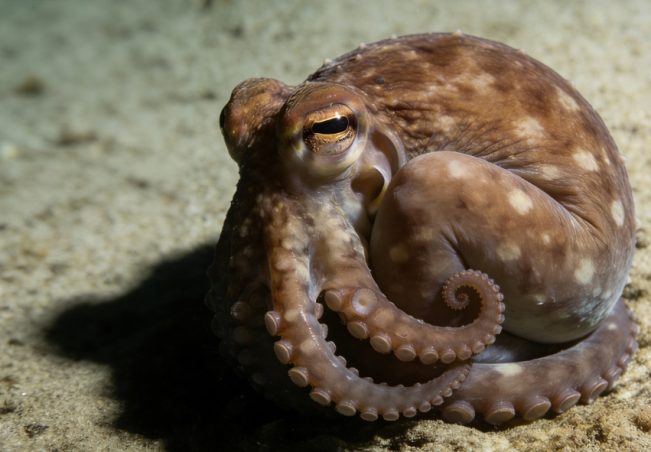
In the depths of the ocean, there is a mysterious and intelligent creature hidden – the octopus. They have a soft body, strong camouflage ability, and infinite intelligence hidden in their heads, which make them unique in the animal kingdom. Octopus is not only a wise man in the ocean, but also a wonderful biological puzzle bestowed upon us by nature. This article will take you into the magical world of octopuses, exploring how they cleverly survive, reproduce, and exhibit extraordinary intelligence.
A highly intelligent marine ‘genius’
Octopuses are not only escape artists in the ocean, but also one of the smartest creatures among invertebrates. Their brain structure is exceptionally complex, with a highly developed nervous system that can even demonstrate considerable ‘brain power’ through muscle movements and coordinated coordination between tentacles. Research has found that octopuses have about five billion neurons in their brains – more complex than many mammals and far beyond typical marine animals.
Their intelligence is astonishing. Octopuses not only solve complex mazes, but also improve their behavior through observation and learning. For example, scientists have conducted experiments where octopuses were placed in a sealed box containing their favorite foods. In order to obtain food, the octopus quickly learned how to open the box and demonstrated unexpected problem-solving abilities. Even more interestingly, they will remember these skills and apply them again in similar situations in the future.
The memory of octopuses is also extremely amazing, and some individuals can even recognize humans they have “interacted with” in the past, which has brought a lot of surprise to researchers.
Disguised artist
When it comes to octopuses, the most talked about aspect is their camouflage technique. Octopus skin contains various pigment cells and reflex cells, which enable them to instantly change body color and texture like chameleons. This kind of camouflage not only helps them avoid predators, but also allows them to approach their prey silently.
These cells in octopus skin are called chromophores. By contracting or expanding their muscles, octopuses can control the area and shape of these pigments, thereby changing the color of their bodies. What’s even more amazing is that they can not only change colors, but also adjust the texture of their skin through meticulous muscle activity, imitate rocks, seaweed, sand particles, and even confuse enemies like other marine animals (such as sea snakes).
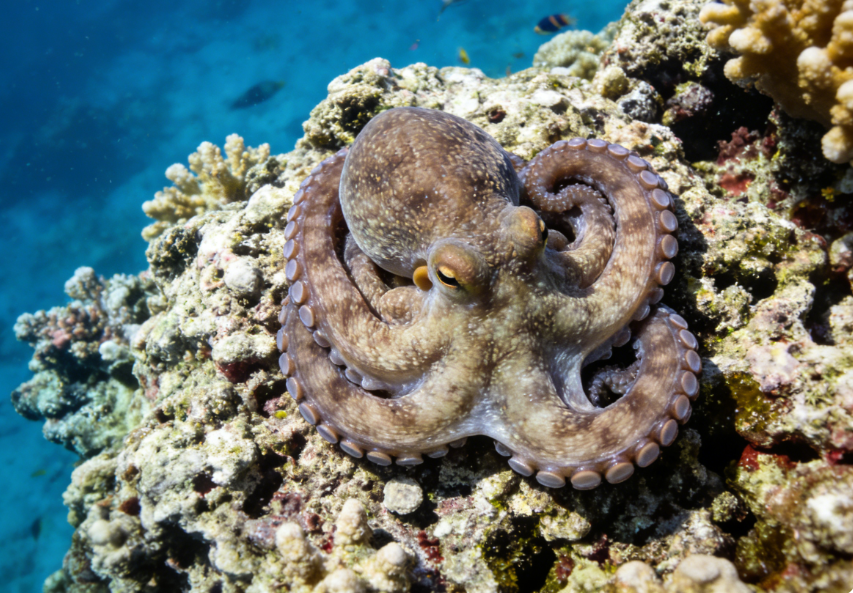
The ultimate use of this camouflage skill allows octopuses to disappear without a trace in almost any underwater environment. Especially when facing natural enemies, octopuses can almost evade all threats with perfect camouflage, becoming one of the most mysterious creatures in the ocean.
Three Hearts and Blue Blood: Incredible Physiological Structure
In addition to their intelligence and camouflage abilities, the physiological structure of octopuses is also a major highlight. Octopus blood is blue because their hemoglobin is replaced by a substance called “hemocyanin”. Copper hemocyanin can efficiently transport oxygen in low oxygen environments, helping octopuses survive in underwater environments with less oxygen.
Even more peculiar is that octopuses have three hearts. One heart is responsible for delivering blood to other parts of the body, while the other two hearts are responsible for supplying blood to the octopus’s gills. Their hearts are affected by blood flow during operation. For example, when octopuses swim, their “donor hearts” temporarily stop beating, causing them to feel very tired while swimming. In contrast, octopuses can easily maintain physiological activity when they are stationary.
A lonely life and deep maternal love
The lifespan of octopuses is usually very short, with the vast majority having a lifespan of only one to three years, which is closely related to their reproductive methods. The mating process of octopuses is full of drama. Male octopuses will mate with females once or several times during the breeding season, while female octopuses will lay eggs after mating.
Female octopuses are extremely motherly creatures. After they lay eggs, females will do their best to protect these eggs until they hatch. It is worth noting that female octopuses hardly eat during egg care and eventually die due to exhaustion. This spirit of sacrifice is very rare in the animal world.
The fate of male octopuses is different, as they also die quickly after mating. This brief cycle of life repeats itself, and the octopus’s life is like a lonely journey. From birth, growth, reproduction, to death, they perform a never-ending cycle of life and death.
Ocean conservation and the future of octopuses
Although octopuses have extraordinary survival abilities in nature, they still face threats from human activities. Marine pollution, habitat destruction, overfishing, and other issues pose significant challenges to the survival of octopuses. In fact, many octopus species are already at risk of extinction, especially those that inhabit coral reefs or deep-sea areas.
Therefore, scientists and environmental organizations are promoting a series of marine conservation measures, including establishing marine protected areas, strengthening fishing supervision, etc., hoping to protect these miraculous creatures in the ocean. At the same time, the biological characteristics of octopuses have also attracted a large amount of scientific research. Researchers are trying to uncover more mysteries about animal intelligence and neurology by studying the octopus’s nervous system, learning ability, and so on.
Octopus, this mysterious marine creature, is not only a disguise artist, but also a symbol of wisdom. They occupy a place in the world of the ocean through their outstanding intelligence, unique physiological structure, and extraordinary camouflage ability. And their short lives and selfless maternal love also provide us with profound insights into the meaning of life and the laws of nature.
In this era full of challenges and changes, protecting these magical marine creatures will not only help us understand the ecosystem of the ocean, but also help us draw wisdom and inspiration from it. Let’s pay attention to octopuses and our shared ocean home together.
Leave a Reply