
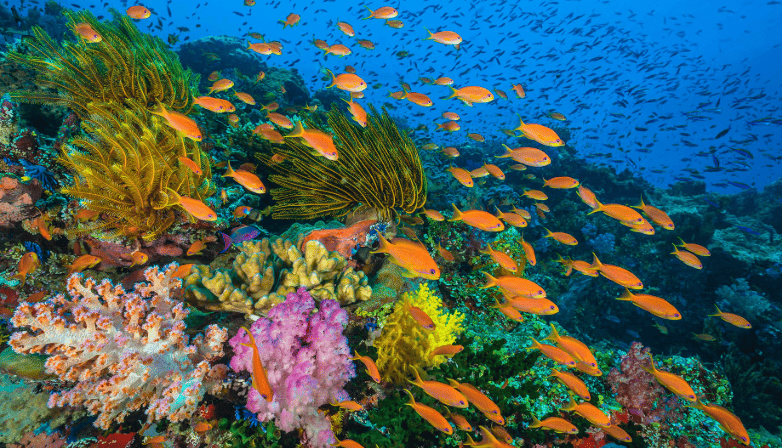
When most people think of coral, vivid images of underwater landscapes immediately come to mind: branching, fan-shaped, bulbous, or even brain-like formations. Corals are not only some of the most beautiful creatures in the ocean—they are also the architects of marine ecosystems. In this article, we’ll dive into the fascinating world of corals, exploring their many shapes, types, and unique traits, taking you on a journey as if you were swimming through a coral reef yourself.
Understanding Coral: Structure and Lifestyle
Corals belong to the phylum Cnidaria, and individual polyps are usually only a few millimeters to a few centimeters tall. Despite their tiny size, polyps reproduce asexually to form large coral colonies. Each polyp is essentially a small sac with tentacles around its mouth for capturing plankton and tiny particles from the water. At its base, the polyp secretes calcium carbonate, forming a hard skeleton—the building blocks of coral reefs.
Corals also have a remarkable partnership with microscopic algae called zooxanthellae. These algae perform photosynthesis to provide nutrients to the coral while giving them their brilliant colors. When stressed by high temperatures or poor water conditions, corals may lose their symbiotic algae, resulting in “coral bleaching,” where the corals turn pale and fragile.
Corals are broadly classified into hard corals (Scleractinia) and soft corals (Alcyonacea). Hard corals are reef builders, forming the backbone of coral ecosystems, while soft corals are flexible and colorful, waving gently in the water currents like underwater flowers.
Common Hard Corals
1. Brain Coral
Brain corals are named for their grooved, brain-like surfaces. They often form large, round or dome-shaped colonies. Slow-growing but long-lived, some species can survive for hundreds of years. Found in places like the Great Barrier Reef and the Caribbean, brain corals are crucial for reef stability.
2. Staghorn Coral
Staghorn corals are fast-growing corals with branching structures resembling deer antlers. Their dense branches provide shelter for small fish and other marine creatures, making them vital to reef biodiversity. Colors range from pale brown to vivid blue.
3. Sea Fan Coral
Sea fan corals belong to soft corals. They are flat and fan-shaped, with branches arranged in intricate lace-like patterns. Positioned perpendicular to water currents, sea fans filter plankton efficiently while swaying gracefully with the flow, creating mesmerizing underwater motion.
4. Lettuce Coral
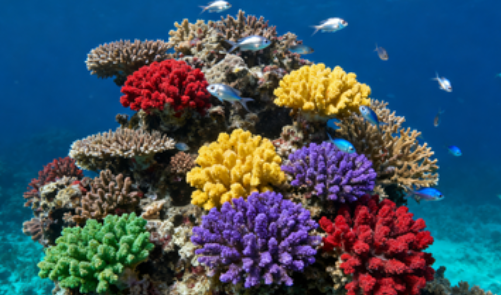
Lettuce corals display wavy, leaf-like formations that spread across rocks. Their layered structures help create microcurrents that capture plankton and nutrients. With shades of green, brown, or cream, they add unique texture to reef landscapes.
5. Mushroom Coral
Mushroom corals are often solitary and circular, resembling small mushrooms. Their colors can range from pink and orange to purple. Sensitive to environmental changes, these corals serve as indicators of reef health.
Enchanting Soft Corals
Soft corals lack hard skeletons and possess flexible, often brightly colored bodies. They are the whimsical artists of the reef.
1. Sea Whip Coral
Sea whip corals are long, slender, and whip-like, swaying in ocean currents. Their brilliant orange, red, or purple hues make them highly photogenic, often a favorite for underwater photographers.
2. Leather Coral
Leather corals have a soft, leathery texture and may appear as columns, umbrellas, or small branching trees. Colors vary from yellow and orange to pink. These corals thrive in well-lit, shallow waters.
3. Sea Plume Coral
Sea plumes resemble delicate feathers and often grow in deeper waters. With intricate feather-like branches, they dance gracefully with ocean currents, providing shelter for tiny marine creatures.
The Mystery of Coral Colors
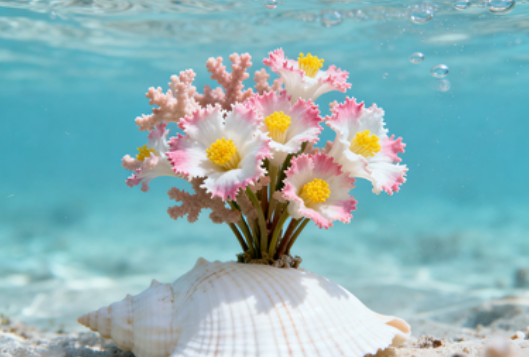
Coral colors arise from both the polyps themselves and their symbiotic algae. Common shades include:
- Reds and Oranges: vibrant, eye-catching
- Blues: sky blue to deep indigo
- Yellows: golden and creamy hues
- Purples: lavender to deep violet
- Greens: emerald and jade tones
Light intensity and water depth influence color. For example, lighter-colored corals usually inhabit sunlit shallow areas, while darker corals thrive in dimmer conditions.
Famous Coral Hotspots
Some of the most stunning coral reefs visited by scuba divers and snorkelers include:
- Great Barrier Reef, Australia: Over 2,300 km long, home to more than 1,500 species of fish and 400 species of corals.
- Caribbean Sea: Includes the Belize Barrier Reef and Florida Reef Tract, known for staghorn and brain corals.
- Red Sea: High temperatures and salinity produce vividly colored reefs.
- Indonesia and the Philippines: Known as the “Coral Triangle,” these waters host incredible biodiversity of soft and hard corals.
These locations are not only visually stunning but also support local fisheries and tourism, drawing visitors from around the globe.
Fun Facts About Corals
- Bioluminescent Corals: Some corals glow faintly at night, attracting prey or deterring predators.
- Moving Corals: Coral larvae can move slowly to find ideal surfaces to attach to.
- Ancient Survivors: Certain brain corals live for over 500 years.
- Coral Battles: Neighboring corals sometimes extend tentacles to fight for space and light, a literal underwater turf war.
Protecting Coral Reefs
Despite their beauty, corals face severe threats from climate change, ocean acidification, overfishing, and tourism-related damage. Coral bleaching and death can occur if water temperatures rise too high or pollutants increase.
Fortunately, global conservation efforts are underway:
- Marine Protected Areas: Limiting human activity to provide safe habitats.
- Coral Restoration Projects: Growing coral fragments in nurseries and transplanting them to damaged reefs.
- Climate Action: Reducing greenhouse gas emissions to mitigate ocean warming and acidification.
- Education and Eco-Tourism: Raising awareness while promoting responsible tourism.
- Scientific Monitoring: Using satellites, underwater drones, and AI to track coral health.
Successful restoration efforts have been reported in places like Okinawa, Japan, where heat-resistant corals are cultivated, and in the Caribbean, where community-based restoration combines tourism and conservation.
Conclusion
From brain corals to sea plumes, from vibrant branches to soft fans, corals are among the most diverse and captivating creatures of the ocean. They decorate the sea floor, sustain countless marine species, and inspire human awe. Protecting them is not just about preserving beauty—it is about safeguarding the health of our oceans and, ultimately, our planet.
Whether you explore them through scuba diving, snorkeling, documentaries, or books, corals offer a colorful window into the underwater world, a reminder of nature’s delicate balance and remarkable creativity.
November is Coral Whitening Awareness Month, a global initiative aimed at raising awareness of the worrying phenomenon of coral bleaching and its threats to coral reefs, marine biodiversity, coastal communities, and our shared ocean future.
Leave a Reply