
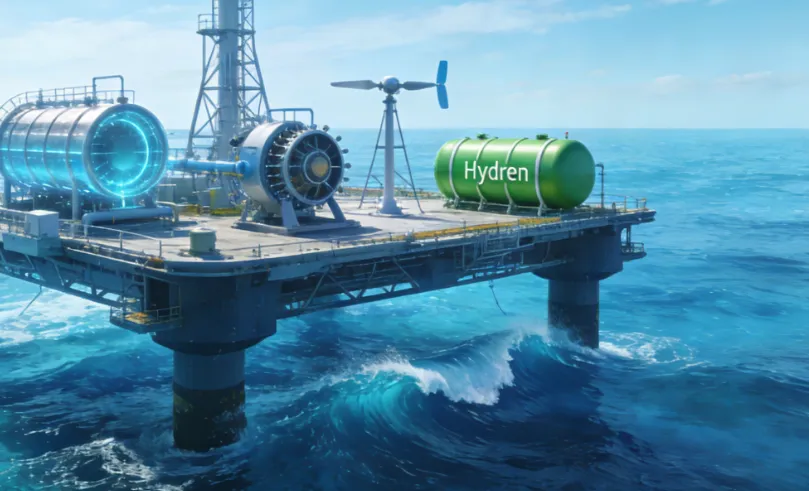
As a marine engineer with over a decade of experience working on offshore energy projects across the North Atlantic and Pacific, I’ve watched the renewable energy landscape evolve dramatically. Today, the ocean—long dismissed as a distant or unproven energy resource—stands poised to become a cornerstone of the global green transition. Two technologies, in particular, are leading this charge: Ocean Thermal Energy Conversion (OTEC) and wave energy conversion. When paired with on-site green hydrogen production, they unlock a path to decarbonize hard-to-abate sectors like shipping, heavy industry, and long-duration energy storage—all while turning the ocean’s untapped potential into a viable, scalable business opportunity.
For businesses, investors, and policymakers targeting net-zero goals, the message is clear: the ocean isn’t just a source of challenge—it’s a source of opportunity. This deep dive explores how OTEC and wave energy work, their synergies with green hydrogen production, real-world case studies, and the practical steps to turn ocean-based hydrogen from a concept into a profitable reality.
Why the Ocean? The Case for Offshore Green Hydrogen
Before diving into the technologies, let’s ground ourselves in why the ocean matters for green hydrogen. Onshore renewables—wind and solar—are critical, but they face limits: land constraints, grid congestion, and intermittency. The ocean, by contrast, offers three unique advantages:
- Unmatched Energy Density: The ocean’s thermal and kinetic resources are constant and predictable (when designed for seasonal variability). OTEC leverages the 20–25°C temperature difference between warm surface water (28–30°C) and cold deep water (4–6°C at 1,000 meters) to generate baseload power—24/7, no sun, no wind required. Wave energy, meanwhile, taps into the power of swells that pound coastlines worldwide, with average power densities of 10–50 kW/m in prime locations like the Celtic Sea and California Current.
- Proximity to Demand: 75% of the world’s largest cities lie within 100 km of the coast. Shipping—responsible for 3% of global CO₂ emissions—is a major hydrogen end user, and offshore hydrogen production eliminates the need for costly, loss-prone undersea power cables. Instead, hydrogen can be stored on-site and delivered via dedicated tankers to ports, creating a circular energy loop.
- Synergy with Existing Infrastructure: Offshore platforms, FPSOs (Floating Production, Storage, and Offloading units), and coastal industrial hubs can be repurposed or built to host OTEC/wave systems and electrolyzers. This reduces upfront costs and accelerates time to market compared to greenfield projects.
Green hydrogen—produced by splitting water with renewable electricity—solves a critical problem: energy storage. Unlike batteries, which excel at short-duration storage (hours to days), hydrogen enables long-duration storage (weeks to months), making it indispensable for grids reliant on intermittent renewables. When made from ocean energy, it’s truly “green” at scale—no fossil fuels, no lifecycle emissions, and a fuel that can be transported globally.
Deep Dive: Ocean Thermal Energy Conversion (OTEC)
OTEC is the oldest ocean energy technology, conceptualized in 1881 but only now maturing into a commercial contender. At its core, it’s a simple thermodynamic cycle: use warm surface water to boil a low-boiling-point fluid (like ammonia or a water-ethanol mixture), drive a turbine to generate electricity, then condense the fluid using cold deep water pumped from 1,000 meters below the surface.
How OTEC Powers Green Hydrogen
The link between OTEC and green hydrogen is straightforward: the electricity OTEC generates powers an electrolyzer to split seawater (after desalination) into hydrogen and oxygen. Here’s the step-by-step process, optimized for offshore deployment:
- Seawater Intake & Desalination: OTEC systems pump vast volumes of seawater—warm surface water for the evaporator, cold deep water for the condenser. Before electrolysis, this seawater is purified via reverse osmosis (RO) to protect electrolyzer membranes, consuming 3–6 kWh of energy per cubic meter of water (a small fraction of OTEC’s baseload output).
- OTEC Power Generation: Three OTEC cycle configurations are most commonly paired with electrolysis:
- Ammonia Rankine Cycle: Uses pure ammonia as the working fluid, with a global efficiency of 3.77% and exergy efficiency of 83.0%.
- Water-Ethanol Rankine Cycle: A lower-cost alternative (80% water, 20% ethanol) with 3.80% global efficiency and 87.8% exergy efficiency.
- Kalina Cycle: The most efficient option, using a variable-composition ammonia-water mixture to match the ocean’s temperature gradient, achieving 93.5% exergy efficiency and a hydrogen production cost of 17.4 €/kg (far lower than other OTEC configurations).
- Electrolysis: Proton Exchange Membrane (PEM) electrolyzers are the preferred choice for OTEC/hydrogen integration, thanks to their fast response times (critical for matching OTEC’s stable output) and wide power range. They split water into high-purity hydrogen (>99.9%) and oxygen, with energy efficiency of 60–70%.
- Compression & Storage: Hydrogen is produced at 30 bar; it’s compressed to 300 bar for storage in on-deck tanks (90 m³ capacity) or transported via undersea pipelines to shore. For remote offshore sites, ammonia (a hydrogen carrier) can be synthesized on-site, using existing global ammonia infrastructure for transport.
OTEC’s Advantages & Limitations
| Advantages | Limitations |
|---|---|
| 24/7 baseload power (no intermittency) | High upfront capital costs (€1.8–2.4 million/MW for floating plants) |
| Ideal for tropical/subtropical regions (100+ countries have suitable temperature gradients) | Large infrastructure needs (pipes, heat exchangers, cold-water pumps) |
| Produces freshwater as a byproduct (2 million liters/day per 1 MW plant) | Low global efficiency (3.5–6.7%)—offset by baseload reliability |
| Minimal environmental impact (no combustion, low marine disruption) | Scaling requires economies of scale (10+ MW plants drive costs down by 50%) |
Real-World OTEC Success Stories
OTEC is no longer a lab experiment. Today, operational projects prove its viability:
- Kumejima Island, Japan: A 100 kW closed-cycle OTEC plant has operated since 2013, powering local homes and desalinating water. It’s a blueprint for small-island electrification.
- Makai Island, Hawaii: A 100 kW open-cycle OTEC plant (2015) produces electricity and 100,000 liters of freshwater daily, demonstrating OTEC’s multi-product potential.
- Floating OTEC Pilots: Japan and the U.S. are testing 1 MW floating OTEC platforms, designed for deployment in open oceans—no shoreline required.
For businesses, OTEC makes the most sense in two scenarios:
- Remote Island Communities: Replace diesel generators (costly, polluting) with OTEC/hydrogen, creating energy independence.
- Offshore Industrial Hubs: Pair OTEC with green hydrogen production for shipping, oil & gas decarbonization, or long-duration energy storage for nearby wind farms.
Deep Dive: Wave Energy Conversion
While OTEC leverages the ocean’s heat, wave energy harnesses its kinetic power—the endless motion of swells that roll across the globe. Wave energy converters (WECs) come in many forms: floating buoys, oscillating water columns, and point absorbers, all designed to capture wave motion and convert it to electricity.
How Wave Energy Powers Green Hydrogen
Wave energy’s greatest strength is its predictability—unlike wind or solar, swells follow seasonal and weather patterns, making it easy to forecast output. For green hydrogen production, the process is simpler than OTEC: WECs generate electricity directly, which powers electrolyzers to split water into hydrogen. Here’s how it works in practice, using the Dolphyn-in-the-PDZ project (Wales, UK) as a model:
- Wave Capture: WECs (e.g., CorPower Ocean’s C4 device) absorb wave energy, converting it to mechanical motion. Advanced WECs can adjust to wave conditions, maximizing energy capture in storms and surviving extreme swells (up to 10 m significant wave height).
- Power Conversion: The mechanical motion drives a generator to produce AC electricity, which is converted to DC for the electrolyzer. For hybrid systems (wave + wind), an energy management system balances output to ensure continuous hydrogen production.
- Electrolysis & Storage: As with OTEC, PEM electrolyzers are used for their flexibility. Wave energy’s variability is managed via electrolyzer load following—adjusting hydrogen production to match power output, or using battery storage for short-term gaps.
- Offtake & Transport: Hydrogen is stored on the WEC platform or a nearby FPSO, then shipped to port via dedicated tankers. In the Celtic Sea, the Switch2Offshore project is building a 300 MW electrolyzer on an FPSO, powered by a mix of wind, solar, and wave energy to produce green ammonia (a hydrogen carrier) for global shipping.
Wave Energy’s Advantages & Limitations
| Advantages | Limitations |
|---|---|
| High energy density (15.8 kW/m in the Celtic Sea) | High upfront costs (£7.65 million/MW for first-of-a-kind devices) |
| Predictable output (seasonal patterns, no sun/wind dependence) | Low technology readiness (most WECs are in TRL 8–9, not yet mass-produced) |
| Minimal visual impact (floating devices can be placed 10+ km offshore) | Requires robust mooring and storm-survival design (6 m tidal ranges in Wales) |
| Synergizes with wind (reduces grid curtailment of excess wind power) | Scaling requires shared infrastructure (electrolyzers, pipelines) to cut costs |
Wave Energy’s Biggest Win: Hybridization
Wave energy alone faces a “valley of death” in financing—first-of-a-kind devices are too expensive for investors. But hybrid systems (wave + wind + hydrogen) solve this by sharing infrastructure and balancing intermittency.
The Dolphyn-in-the-PDZ project (Pembrokeshire, UK) is a game-changer:
- It pairs 9 x 15 MW floating wind turbines with 1.75 MW of wave energy converters (scaling to 15.75 MW).
- All power goes to a shared electrolyzer, producing green hydrogen for the Celtic Sea market.
- Wave energy fills in during wind lulls, reducing hydrogen production costs to £179–204/MWh—competitive with grid power.
- The project creates 2,000+ jobs during construction and 50+ permanent roles, delivering £70 million in local economic value.
For European and North American businesses, wave energy is a no-brainer for coastal regions with strong wave resources (e.g., the U.S. West Coast, Norway, Ireland). It’s not just a renewable energy source—it’s a driver of local jobs, supply chain growth, and energy security.
The Green Hydrogen Advantage: Why Offshore Ocean Hydrogen Beats Alternatives
To understand why ocean-based green hydrogen is the future, let’s compare it to other hydrogen production pathways:
| Pathway | Cost (€/kg H₂) | Carbon Footprint (kg CO₂/kg H₂) | Scalability | Offshore Viability |
|---|---|---|---|---|
| OTEC + Green Hydrogen | 17.4–32.6 (scales down with size) | 0 (renewable) | High (100+ MW plants) | Excellent (floating/land-based) |
| Wave Energy + Green Hydrogen | 18–35 (hybrid with wind) | 0 (renewable) | High (10+ MW arrays) | Excellent (shared wind infrastructure) |
| Onshore Wind + Green Hydrogen | 6–8 | 0 | Very High | Poor (grid congestion, transmission costs) |
| Fossil Fuel + CCS | 1–2.7 | 2–5 | Very High | N/A (not green) |
| Solar + Green Hydrogen | 8.5 | 0 | High | Moderate (requires large land/batteries) |
The numbers speak for themselves: ocean-based green hydrogen is competitive with fossil fuels at scale and far more sustainable than any fossil-based pathway. For businesses targeting net-zero, it’s the only hydrogen option that delivers on both cost and carbon goals.
Key Use Cases for Offshore Ocean Hydrogen
- Maritime Decarbonization: Shipping accounts for 3% of global CO₂ emissions; green hydrogen (or ammonia) is the only viable fuel for deep-sea vessels. Offshore production eliminates the need for hydrogen transport to remote ports, cutting costs by 30–40%.
- Heavy Industry: Steel, cement, and chemical manufacturing are hard to decarbonize. On-site green hydrogen from OTEC/wave replaces coal and gas, reducing industrial emissions by 90%+.
- Long-Duration Energy Storage: For grids with high wind/solar penetration, ocean hydrogen provides 100+ hours of storage—critical for maintaining grid stability during extreme weather or low-generation periods.
- Remote Island Energy Independence: Small island nations rely on expensive diesel imports. OTEC/hydrogen systems turn their surrounding oceans into a domestic energy source, slashing energy costs by 50%+.
Overcoming Barriers: What It Takes to Scale
Despite its potential, ocean-based green hydrogen faces three key barriers—all solvable with strategic investment and policy support:
1. High Upfront Costs
The biggest hurdle is capital expenditure (CAPEX):
- OTEC floating plants cost €1.8–2.4 million/MW (vs. €1 million/MW for onshore wind).
- WECs cost £7.65 million/MW for first-of-a-kind devices (falls to £4.68 million/MW at scale).
Solutions:
- Economies of Scale: Build 10+ MW plants/arrays to cut unit costs by 50% (OTEC) or 40% (wave)[21].
- Shared Infrastructure: Pair OTEC/wave with wind electrolyzers, pipelines, and storage to reduce CAPEX by 30%.
- Grants & Subsidies: Governments (EU, U.S., UK) offer grants for ocean energy R&D (e.g., EU’s Horizon Europe, U.S. DOE’s Ocean Energy Program).
2. Technology Maturity
OTEC is mature (operational 100 kW plants), but wave energy is still in the demonstration phase.
Solutions:
- Demonstration Projects: Scale pilots to 1–10 MW to prove reliability and reduce risk for investors (e.g., Dolphyn-in-the-PDZ, Switch2Offshore)[21].
- Public-Private Partnerships (PPPs): Collaborate with research institutions (e.g., PNNL, EMEC) to accelerate technology improvements.
3. Regulatory & Permitting
Offshore projects face complex permitting (marine protected areas, environmental impact assessments).
Solutions:
- Streamlined Permitting: Create dedicated offshore energy zones (e.g., the UK’s Pembrokeshire Demonstration Zone) to reduce approval timelines from 5+ years to 2–3.
- Environmental Stewardship: Design OTEC/wave systems to minimize marine impact (e.g., low-speed cold-water pumps, no seabed disturbance).
The Future Is Now: Next Steps for Businesses & Investors
If you’re ready to tap into the ocean’s green hydrogen potential, here’s a practical roadmap:
For Businesses
- Assess Your Resource: Use tools like the IEA Ocean Energy Database to map OTEC/wave resources near your operations (e.g., tropical regions for OTEC, Atlantic coasts for wave).
- Choose the Right Technology:
- OTEC for remote islands, offshore industrial hubs, or 24/7 baseload power.
- Wave energy for coastal regions with strong swells (e.g., Europe, U.S. West Coast).
- Hybrid systems (OTEC/wave + wind) for maximum reliability and cost savings[21].
- Partner with Experts: Collaborate with OTEC/wave developers (e.g., Lockheed Martin
Leave a Reply