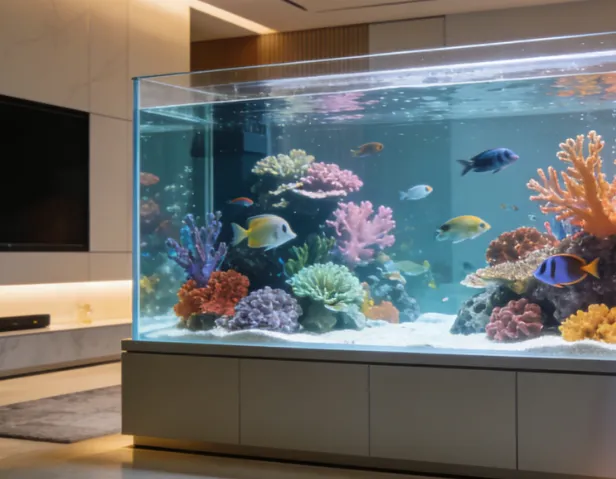
Today, I’m sharing exactly how to build a high-end smart reef aquarium system that mimics a real coral reef ecosystem, with fully automated monitoring for salinity, temperature, pH, and even auto-feeding. This setup is designed for busy people, homeowners, and hobbyists who want a stunning, low-fuss slice of the ocean in their living room.
Let’s dive in.
Why a Smart IoT Reef Tank Is Taking Over Western Homes
Reef tanks aren’t just decorations—they’re living, moving pieces of art. But traditional saltwater aquariums are high-maintenance. That’s why smart, IoT-powered systems have blown up in the US, Canada, and Europe:
- No more daily testing: Sensors track water parameters 24/7.
- Remote control: Check your tank from your phone while at work or on vacation.
- Stability = success: Corals and fish thrive when conditions don’t fluctuate.
- Peace of mind: Alerts sent straight to your phone if something goes wrong.
- Aesthetic upgrade: A clean, modern reef tank becomes the centerpiece of any home.
Whether you’re a beginner or a long-time reef keeper, this system lets you enjoy the beauty of the ocean without the constant stress.
Step 1: Plan Before You Buy – Avoid Costly Mistakes
Before ordering any gear, get these three things right.
Location
- Place your tank away from direct sunlight (prevents algae blooms).
- Keep it away from AC units, heaters, and drafty windows.
- Make sure your floor can support the weight: roughly 8–10 lbs per gallon (1 kg per liter).
- Strong Wi‑Fi signal is non-negotiable for IoT devices.
Budget Breakdown (US & EU Standards)
I’ve divided this into realistic tiers for Western hobbyists:
- Entry Smart System: $4,000 – $8,000Basic tank, Wi-Fi salinity/temperature sensors, simple auto-feeder.
- Premium Mid-Tier: $8,000 – $20,000Custom tank, full water parameter monitoring, smart lighting, controllable flow, automated heating/cooling.
- High-End Luxury System: $20,000+Custom acrylic display, full IoT ecosystem, advanced life support, app-integrated camera, voice control.
My personal setup is mid-tier, and it’s more than enough for a thriving, show-quality reef.
Non-Negotiable Water Parameters
These are the targets your IoT system will maintain:
- Salinity: 32–35 ppt (ideal: 33–34 ppt)
- Temperature: 24–27°C (75–80°F)
- pH: 8.1–8.4
- Nitrates: < 20 ppm
- Ammonia & Nitrite: 0 ppm
Every sensor and automation works to keep these stable.
Step 2: Best Hardware for a High-End Smart Reef Tank
These are the most trusted brands in the US and Europe for reliability and IoT integration.
1. The Tank Itself
- Waterbox Aquatics (USA): Ultra-clear glass, silent overflow, clean modern design.
- Red Sea Reefer (Germany): Professional-grade, optimized for SPS/LPS corals.
- Custom Acrylic Tanks: Lighter, clearer, great for large show tanks.
2. IoT Water Monitoring Sensables
These are the “eyes and ears” of your smart tank.
- Salinity Sensor: Apex Salinity Sensor, Aqua Illumination HydraPrecision ±0.1 ppt, Wi-Fi enabled, app graphing, instant alerts.
- Temperature & pH Sensor: Hach, Neptune Systems, MilwaukeeLab-style accuracy, records historical data, triggers heating/cooling automatically.
- ORP & Nitrate Sensors (Premium Upgrade):Full water quality monitoring for serious reefers.
3. Automated Control Equipment
Auto-Feeding System
- Neptune Systems Apex Auto Feeder
- Eheim Digital Auto Feeder
Set multiple feeding times, portion control, and even adjust remotely. Many models sync with nitrate sensors to slow feeding if water quality drops.
Smart Heating & Cooling
- Titanium Heaters: Finnex, Eheim
- Aquarium Chillers: For warm climates, prevents coral bleaching
- IoT Controllers turn devices on/off automatically to hold ±0.3°C accuracy.
Smart Return Pumps & Wave Makers
- Ecotech Marine VorTech
- Maxspect Gyre
Program wave patterns to mimic natural reef flow. Control speed, pulse, and schedule via app.
Full-Spectrum LED Lighting
- Kessil
- Ecotech Marine Radion
- Hydra FiftyTwo HD
Simulate sunrise, sunset, moonlight, and thunderstorms. Lights ramp slowly to avoid shocking corals.
Step 3: Build Your IoT Ecosystem – Two Easy Methods
You don’t need to be a coder. Here are the two most popular setups in the Western world.
Option A: All-in-One System (Beginner Friendly)
Best for people who want “set it and forget it.”
Main System: Neptune Systems Apex Fusion
- Connect the Apex brain to your router.
- Plug in sensors, pumps, lights, and feeder.
- Use the app to set modes:
- Home Mode: Normal lighting, feeding schedule, stable temperature.
- Vacation Mode: Reduced feeding, low-energy lighting, safety alerts.
- Viewing Mode: Moonlight + gentle flow for entertaining guests.
- Push notifications warn you of spikes, drops, or equipment failures.
Option B: DIY Smart System (For Tech & Makers)
Use Home Assistant or Samsung SmartThings to build a fully custom setup.
- Connect any brand of sensor or device.
- Create custom rules:
- If salinity > 35 ppt → auto-topoff starts.
- After 10 PM → lights dim, pumps slow down.
- If nitrate > 15 ppm → alert to do a water change.
- Add voice control with Amazon Alexa or Google Assistant.
Privacy & Security (Important in EU & USA)
- Change all default passwords.
- Use WPA2/3 secured Wi-Fi.
- Disable cloud sharing if you prefer local data storage.
Step 4: Cycle the Tank & Build a Living Coral Reef
Even the smartest gear won’t save a rushed tank.
1. Cycle the Tank (2–4 Weeks)
- Mix saltwater (Instant Ocean or Red Sea Salt).
- Add bacteria starter (Microbe-Lift, Dr. Tim’s).
- Run pumps, heaters, and sensors 24/7.
- Wait until ammonia and nitrite hit 0.
Your IoT sensors will show you the cycle in real time.
2. Add Livestock Slowly
Stage 1: Clean-up Crew
- Hermit crabs, snails, cleaner shrimp, starfish
- Controls algae and breaks down waste
Stage 2: Soft Corals (Easy)
- Mushrooms, leathers, zoanthids, anemones
- Great for beginners and clownfish hosting
Stage 3: LPS & SPS Corals (Advanced)
- Brain corals, acropora, montipora
- Require stable light, flow, and water chemistry
Stage 4: Fish
- Clownfish, tangs, gobies, blennies
- Don’t overstock — 1 inch of fish per 5 gallons is a safe rule
Step 5: Daily & Weekly Maintenance (Minimal Work!)
The whole point of IoT is to reduce chores.
- 1 minute per day: Check the app for alerts.
- 10 minutes per week: 10% water change.
- 30 minutes per month: Clean filters, check sensors.
- Quarterly: Calibrate salinity and pH probes.
I spend less time on my smart reef tank than I do watering my lawn.
Why This Changes Everything
A smart IoT reef tank isn’t just a hobby upgrade. It’s a way to bring the calming, breathtaking beauty of the ocean into your home without sacrificing your time, job, or travel.
Kids love it. Guests are amazed. It reduces stress. It’s educational. And with modern automation, anyone can keep a thriving coral reef in their home.
You don’t need to be rich.
You don’t need to be a marine biologist.
You just need the right gear and a smart system.
Final Thoughts
If you’ve ever wanted a slice of the tropical ocean in your living room, now is the best time in history to build one.
IoT sensors, automated feeding, smart lighting, and app control have made reef keeping accessible, reliable, and incredibly rewarding.
If you have questions about equipment, setup, or livestock, drop a comment below. I reply to every one.
Leave a Reply