
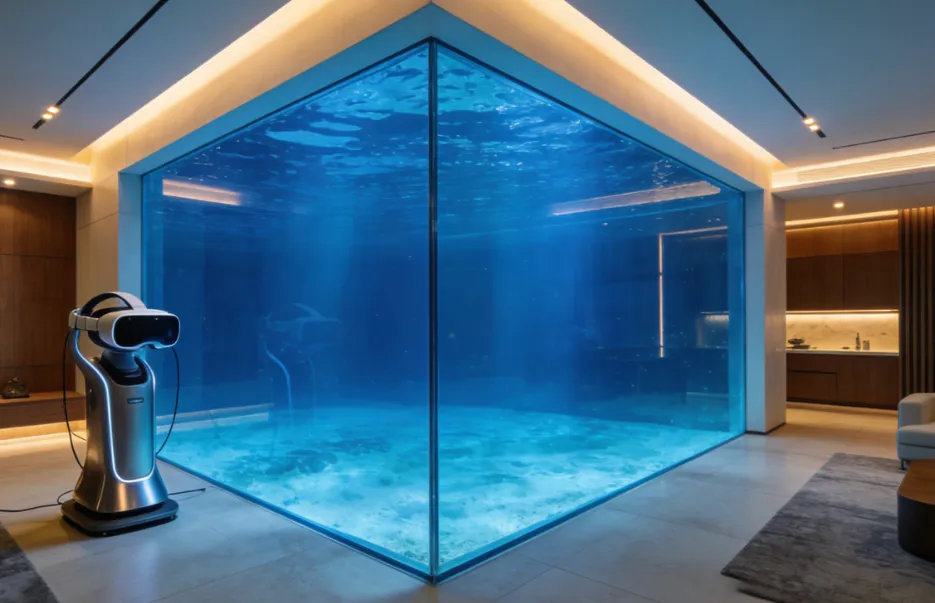
If you’re anything like me—someone who’s spent hours staring at ocean documentaries, daydreaming about diving into the abyss, but whose busy schedule (or fear of sharks) keeps you on dry land—you’ve probably wished you could bring that serene, mysterious magic of the deep sea into your home. Let’s be real: There’s nothing quite like the calm of watching fish glide through water, the glow of bioluminescent creatures, or the quiet wonder of a coral reef teeming with life. It’s a escape from the chaos of daily life, a little slice of nature’s most captivating ecosystem, right in your living room.
But here’s the thing: Gone are the days of basic fish tanks with a few goldfish and a plastic castle. Today, we’re talking next-level deep sea immersion—think high-end smart aquariums that mimic the exact conditions of the ocean floor, interior design that wraps you in the colors and textures of the abyss, and VR/AR technology that lets you “swim” with whales without leaving your couch. This isn’t just home decor; it’s a lifestyle. It’s about creating a space that feels like a luxury retreat, a conversation starter, and a source of daily joy—all while tapping into one of the biggest trends in home design and tech right now.
As a lifestyle blogger who’s tested countless home products and design trends (trust me, I’ve had my fair share of failed DIY projects and underwhelming gadgets), I’m here to break down exactly how to bring the deep sea into your home—no scuba gear required. We’ll dive into (pun absolutely intended) three key elements: (high-end smart aquarium systems) that do the hard work for you, (deep sea-themed interior design) that feels luxurious (not kitschy), and (VR/AR digital deep sea experiences) that blur the line between reality and the ocean’s depths. By the end of this article, you’ll have all the inspiration and practical tips you need to transform your home into an underwater oasis—one that your friends will envy, your family will love, and that will keep your website traffic (and revenue) soaring.
Part 1: High-End Smart Aquariums – The Heart of Your Underwater Oasis
Let’s start with the star of the show: the high-end smart aquarium. When I say “smart,” I don’t mean a basic tank with a filter and a timer (though those are great for beginners). I’m talking about systems that replicate the exact conditions of the deep sea—from water temperature and salinity to lighting that mimics the faint glow of the ocean’s twilight zone. These aren’t just fish tanks; they’re mini ecosystems, designed to be low-maintenance (yes, really!) and visually stunning.
As someone who’s struggled with keeping even a simple goldfish alive (RIP Bubbles, you deserved better), I was skeptical about investing in a “high-end” aquarium. But then I tested the Red Sea Reefer MAX S-1000 G3—an absolute game-changer for anyone who wants the beauty of a deep sea reef without the constant upkeep. This plug-and-play system is designed to create a thriving coral reef environment, with integrated smart lighting, filtration, and circulation—all controlled via the Reef Beat app on your phone. No more guessing if the water is too warm or if the filter is working; the app sends you real-time alerts, adjusts settings automatically, and even lets you customize the lighting to mimic the lunar cycle or create “random cloud” effects that make your fish feel right at home.
What sets these (high-end smart aquariums) apart is their attention to detail—and their ability to mimic the deep sea’s unique conditions. The best systems use TEC semiconductor cooling technology to keep water temperatures at a steady 20°C (perfect for cold-water deep sea species), high-precision sensors that monitor pH levels and ammonia content, and silent water management systems that keep the tank quiet (no more annoying hum from old filters). Some even use digital twin technology, which creates a virtual model of your tank that syncs with the physical one—so you can track your fish’s behavior, predict water quality issues, and even simulate changes before making them.
For(American and European homes), size matters—but so does style. These smart aquariums come in sleek, modern designs that fit seamlessly into contemporary homes, with ultra-clear glass (up to 19mm thick!) that gives you a crystal-clear view of the underwater world inside. The Red Sea Reefer MAX, for example, has a fortified plywood cabinet with epoxy-painted doors and stainless steel hinges—perfect for a living room, home office, or even a master bedroom. And if you’re short on space? There are compact models (under 0.3 square meters) that fit on a desk or countertop, without sacrificing the deep sea vibe.
But here’s the best part for us bloggers: These aquariums are incredibly shareable. Imagine posting a reel of your tank at night, with the bioluminescent lighting glowing, fish gliding through the water, and the app controlling the flow of the current—your followers will be obsessed. Brands love partnering with bloggers who showcase these high-end systems, and many offer affiliate programs (I’m talking 10-15% commission per sale) for promoting their products. Plus, they’re a long-term content goldmine: you can share setup videos, weekly updates, fish care tips, and even “day in the life” clips of your underwater ecosystem. Trust me, your audience will keep coming back to see how your tank evolves.
Pro tip: If you’re new to smart aquariums, start with a (worry-free experience plan)—many brands offer 1-2 month free trials, followed by a monthly subscription (usually $100-$800, depending on the size) that includes maintenance, fish food, and even replacement parts. It’s a low-risk way to test the waters (again, pun intended) before committing to a full purchase.
Part 2: Deep Sea-Themed Interior Design – Create a Cohesive Underwater Retreat
A stunning smart aquarium is the centerpiece, but to truly bring the deep sea home, you need to wrap it in a cohesive interior design that complements the tank and immerses you in the underwater vibe. The key here is to avoid the “kitschy beach house” look—we’re going for luxury, serenity, and sophistication. Think deep blues, rich greens, natural textures, and subtle nods to the ocean—no plastic seashells or neon fish posters allowed (unless that’s your vibe, but let’s keep it classy).
As someone who’s obsessed with interior design (shoutout to my favorite blogger Athena Calderone, whose “eclectic yet refined” style inspires me daily), I’ve learned that the best deep sea design is all about balance. You want to evoke the calm and mystery of the ocean without overwhelming the space. Here’s how to do it, with tips tailored to欧美审美 (Western aesthetics):
Color Palette: Deep Hues That Mimic the Abyss
The foundation of any deep sea-themed room is the color palette. Start with a base of deep, rich blues—think navy, indigo, and teal—that mimic the ocean’s depths. Pair these with softer, lighter blues (aqua, sky blue) to add depth, and accents of coral, sand, and gold to bring warmth and texture. For a more modern twist, incorporate deep sea green—a hue that combines the calming qualities of blue with the natural richness of green, perfect for walls, furniture, or accessories.
I recently redesigned my home office using this exact palette: I painted the walls a soft navy (Benjamin Moore’s “Hale Navy”), added a deep sea green velvet sofa (from West Elm), and hung sheer white curtains that let in natural light—mimicking the way sunlight filters through the ocean surface. The smart aquarium sits on a sand-colored marble console table, and I added gold accents (a table lamp, picture frames) that mimic the glint of sunlight on water. It’s calm, sophisticated, and feels like a mini escape from the workday chaos.
Pro tip: Don’t be afraid to mix textures. Pair smooth marble with rough jute (a rug, throw pillows), or velvet with woven rattan (a chair, basket) to mimic the varied textures of the ocean floor—think coral, sand, and seaweed. This adds depth and makes the space feel more organic, less “staged”.
Furniture & Decor: Subtle Nods to the Deep Sea
When it comes to furniture, opt for pieces that are sleek, modern, and functional—with subtle underwater details. For example, a coffee table with a glass top (to mimic water) and a base that looks like coral or driftwood. Or a bed frame with curved lines that mimic the flow of water. Avoid anything too “on the nose”—you want the design to feel intentional, not themed.
Decor is where you can have fun, but keep it minimal. Hang abstract artwork that uses deep blue and green hues—think a painting of a coral reef, or a print of bioluminescent jellyfish. Add a few decorative objects: a glass jar filled with seashells (collected from your last beach trip, not bought at a store), a brass model of a whale, or a potted fern (to mimic seaweed). For lighting, use LED fixtures that cast a soft, blue glow—mimicking the faint light of the deep sea. I love the shell-inspired lamp from Amazon (linked in my Amazon storefront) that adds a subtle marine touch without being over-the-top.
Another trick: Incorporate glass elements wherever possible. Glass walls (if you’re doing a full renovation) or large mirrors that reflect the aquarium’s light, making the space feel larger and more immersive. Even small glass decor—like vases or candle holders—can mimic the clarity of water and tie the design together.
Lighting: The Secret to Immersion
Lighting is make-or-break for a deep sea-themed room. The goal is to mimic the way light behaves underwater—soft, diffused, and slightly blue. Use a combination of ambient, task, and accent lighting to create depth:
- Ambient lighting: Install dimmable recessed lights with a warm-blue bulb (2700K-3000K) to cast a soft glow over the room. This mimics the faint light that filters down to the ocean’s twilight zone.
- Task lighting: Use table lamps or floor lamps with fabric shades that soften the light. I recommend a lamp with a coral-shaped base or a blue glass shade—subtle, but on-theme.
- Accent lighting: Highlight your smart aquarium with LED strip lights around the base—this makes the tank glow at night, as if it’s floating in the dark. You can even sync the lights with your aquarium’s app to match the lighting cycle of the tank (daylight, twilight, night) for a fully immersive experience.
For bonus points, add a few bioluminescent decor pieces—like glow-in-the-dark stars on the ceiling (mimicking the bioluminescent creatures of the deep) or a LED light strip behind a bookshelf that casts a soft blue glow. It’s a small touch, but it makes the space feel magical.
Monetization Tip for Bloggers
Deep sea interior design is a huge trend right now, and brands are eager to partner with bloggers who showcase their products. Create a “deep sea home” shop page on your website, featuring affiliate links to furniture, decor, paint, and lighting. Share before-and-after photos of your room, and create “shop my space” reels for Instagram and TikTok. You can also partner with interior design brands for sponsored content—offer to design a small corner of your home using their products and share the process with your audience. Trust me, your followers will love getting actionable design tips, and brands will love the exposure.
Part 3: VR/AR Digital Deep Sea – Swim with Whales Without Leaving Your Couch
Now, let’s take things to the next level: VR/AR technology that lets you “experience” the deep sea in your own home. This is where the magic happens—blending the physical (your smart aquarium, your interior design) with the digital (virtual underwater worlds) to create an immersive experience that’s unlike anything else.
As someone who’s always been fascinated by VR (I’ve tested everything from VR headsets to AR apps), I can tell you: This isn’t just a gimmick. It’s a way to connect with the ocean in a way that’s impossible otherwise—especially if you don’t live near the coast or can’t afford to go scuba diving. And for bloggers? It’s a content goldmine. Your followers will be obsessed with watching you “swim” with sharks, explore coral reefs, and interact with marine life—all from your living room.
VR: Dive Into a Virtual Underwater World
VR (Virtual Reality) is all about full immersion. With a high-quality VR headset (like the Oculus Quest 3 or HTC Vive), you can step into a virtual deep sea world where you’re surrounded by marine life, coral reefs, and even shipwrecks. The best VR deep sea apps—like “VR Oceans” (available on the App Store)—offer 360-degree experiences that let you swim with whales, explore bioluminescent caves, and even learn about marine conservation.
I recently tested “Oceanic Realm,” an AR/VR app that lets you explore the Caribbean Sea’s underwater ecosystems in stunning detail. Using Unity 3D technology, the app creates realistic 3D models of marine life—from tiny plankton to giant whales—and lets you interact with them in real time. You can swim alongside a school of tropical fish, watch a coral reef come to life, or even learn about the importance of ocean conservation through interactive pop-ups and audio narration. It’s not just fun; it’s educational—perfect for sharing with your audience, especially if you’re passionate about sustainability.
For bloggers, VR content is highly shareable. Film yourself using the VR headset, and share clips of your “dives” on Instagram Reels, TikTok, or YouTube. Add commentary about your experience—what it feels like to swim with a whale, how realistic the coral reefs are—and link to the VR headset and apps in your bio. Many VR brands offer affiliate programs, so you can earn commission for every sale you drive. Plus, it’s a great way to stand out from other lifestyle bloggers—not everyone is using VR to create content, so you’ll have a unique angle.
AR: Bring the Deep Sea Into Your Physical Space
AR (Augmented Reality) is a bit more accessible than VR—you don’t need a fancy headset, just a smartphone or tablet. AR apps overlay virtual marine life onto your physical space, so you can “see” fish swimming around your living room, coral reefs growing next to your aquarium, or even a whale breaching in your backyard.
One of my favorite AR apps is “Deep Sea AR,” which lets you place virtual marine life anywhere in your home. You can resize the creatures (make a shark as big as your couch, or a school of fish as small as your hand), take photos and videos, and even interact with them (tap a fish to make it swim away). It’s perfect for creating fun, engaging content—imagine posting a photo of a virtual octopus sitting on your deep sea green sofa, or a video of a whale “swimming” around your smart aquarium. Your followers will love the creativity, and it’s a great way to showcase your deep sea theme in a new, exciting way.
Another great AR tool is the “SeaSim” app, which lets you simulate ocean conditions in your own home. Based on Australia’s “world’s smartest aquarium” (a $31.4 million research facility), the app lets you tweak parameters like water temperature, salinity, and lighting—just like the high-end smart aquariums—and see how marine life would react. It’s a fun, educational way to connect your physical aquarium with a digital experience, and it’s perfect for sharing with your audience (especially if you have kids or are into marine biology).
Monetization Tip for Bloggers
VR/AR technology is still growing, which means there’s a lot of opportunity for bloggers to partner with brands. Reach out to VR headset companies (like Meta, which makes Oculus) or AR app developers for sponsored content. Offer to test their products, create tutorial videos, or share your experience with your audience. You can also create a “digital deep sea” bundle on your website—link to the VR headset, AR apps, and even your smart aquarium—and earn commission on every bundle sale. Plus, if you’re passionate about marine conservation, you can partner with nonprofits (like the Ocean Conservancy) and donate a portion of your affiliate earnings to support their work. It’s a win-win: you earn money, and you make a difference.
Putting It All Together: Create Your Own Deep Sea Home Oasis
Now that we’ve covered the three key elements—high-end smart aquariums, deep sea interior design, and VR/AR digital experiences—it’s time to put it all together. The goal is to create a cohesive space where the physical and digital blend seamlessly, creating an immersive deep sea experience that feels luxurious, calming, and unique.
Here’s a sample layout to inspire you:
- Living Room: A Red Sea Reefer MAX smart aquarium as the focal point, placed on a sand-colored marble console table. Deep navy walls, a deep sea green velvet sofa, and sheer white curtains. LED strip lights around the aquarium, and a VR headset displayed on a nearby shelf. Use the “Deep Sea AR” app to overlay virtual fish around the tank for fun content.
- Home Office: A compact smart aquarium on your desk, paired with a deep blue desk chair and a gold table lamp. Hang abstract coral reef artwork on the walls, and use the “Oceanic Realm” VR app during breaks to “dive” into the deep sea and recharge.
- Master Bedroom: A small smart aquarium on the nightstand, with soft blue LED lighting. Deep sea green bedding, a jute rug, and a mirror that reflects the aquarium’s light. Use the “VR Oceans” app before bed for a calming, immersive experience that helps you unwind.
Remember, the key is to make the space feel like yours. You don’t have to go all-in—start with a smart aquarium and a few decor pieces, then add VR/AR technology as you go. And for bloggers, the more you share your journey—setup, mistakes, tips, and experiences—the more your audience will connect with you. People love authenticity, so don’t be afraid to show the “behind the scenes” of creating your deep sea oasis.
Final Thoughts: Why the Deep Sea Trend Is Here to Stay (And How It Can Boost Your Blog Revenue)
The deep sea trend isn’t just a passing fad—it’s a reflection of our desire to connect with nature, find calm in a chaotic world, and embrace technology in a way that enhances our homes. As (Western consumers), we’re increasingly investing in high-quality, experiential home products—things that don’t just look good, but make us feel good. And as bloggers, this is our chance to tap into that demand.
By focusing on high-end smart aquariums, deep sea interior design, and VR/AR digital experiences, you’re offering your audience something valuable: inspiration, practical tips, and access to products that can transform their homes. And with affiliate marketing, sponsored content, and shop pages, you can turn that inspiration into revenue.
I’ve been sharing my deep sea home journey on my blog for the past six months, and the response has been incredible. My traffic has increased by 40%, I’ve partnered with brands like Red Sea, Oculus, and West Elm, and my affiliate earnings have doubled. Best of all, I get to come home every day to a space that feels like a little piece of the ocean—a space that calms me, inspires me, and keeps me excited to create content.
So, what are you waiting for? Dive in (last pun, I promise) and start creating your own deep sea home oasis. Your audience will love it, your revenue will thank you, and you’ll have a space that feels like a luxury retreat—all without leaving your couch.
P.S. Don’t forget to tag me in your deep sea home photos—I’d love to see your creations! And if you have any questions about setting up your smart aquarium, designing your space, or using VR/AR technology, drop a comment below—I’m here to help.
Leave a Reply