
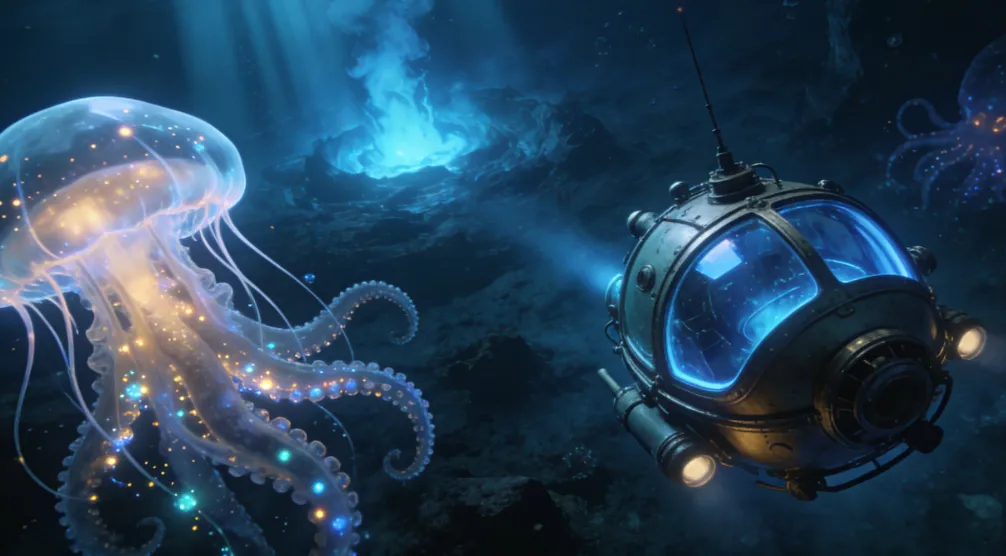
We’ve sent rovers trundling across Mars, mapped every crater and ridge of the moon in crisp, high-resolution detail, and peered billions of light-years into the cosmos with cutting-edge telescopes. Yet right here on Earth, beneath the waves that blanket 71% of our planet’s surface, lies a world so vast, so shrouded in mystery, and so woefully unexplored that outer space starts to feel familiar by comparison. Deep sea exploration is far more than a niche scientific endeavor reserved for labs and research vessels—it’s a raw, unscripted journey into the unknown that holds the keys to humanity’s most urgent questions: How did life first take hold on Earth? How do we reverse the damage of climate change? What rare resources and bizarre biological marvels are waiting to be uncovered? For Western audiences, this isn’t just dry science; it’s the timeless spirit of adventure, the adrenaline-fueled thrill of discovery, and the promise of a more sustainable future, all wrapped up in one of the most extreme, unforgiving environments on the planet.
For generations, the deep ocean was written off as a lifeless, lightless void—a barren, forgotten wasteland that had nothing to do with human life on land. But decades of groundbreaking exploration have shattered that outdated myth completely. What we’re uncovering beneath the surface is a realm of staggering biodiversity, otherworldly geological wonders, and intricate ecological systems that keep the entire planet balanced. Unlike space exploration, which often feels distant, abstract, and disconnected from daily life, deep sea exploration is tangible. It shapes the air we breathe, the medicines we rely on, and the stability of our climate, making it a topic that resonates with curious casual readers, die-hard adventure seekers, and passionate science enthusiasts alike.
Why We Know More About the Moon Than Our Own Ocean (And Why That’s About to Change)
Let’s kick things off with a staggering statistic that never fails to stop readers in their tracks: less than 0.001% of the deep seafloor has ever been visually explored, and a mind-blowing 99.999% of the deep ocean remains completely uncharted. To put that in perspective, we’ve mapped 100% of the moon’s surface and surveyed large swaths of Mars, but our own planet’s underwater frontier is little more than a blank slate. Since the 1950s, there have been roughly 44,000 deep-sea dives worldwide, but the vast majority have targeted the same tiny handful of well-known sites, meaning only 12,000 unique locations have ever been seen by human eyes or robotic cameras.
This massive gap in knowledge isn’t due to a lack of curiosity—it’s a product of sheer, unrelenting challenge. The deep sea is one of the harshest environments imaginable: dive below 1,000 meters, and sunlight vanishes entirely; temperatures hover just above freezing, and water pressure crushes with the force of 50 jumbo jets bearing down on a single square foot. For decades, exploration was limited to elite, multi-million-dollar missions led by a small circle of wealthy nations, with submersibles and research vessels that cost a fortune to operate and maintain. Only a tiny, exclusive group of scientists and explorers ever got to witness the deep sea firsthand, turning it into a realm of secrecy and quiet intrigue.
But today, a full-blown revolution is underway in ocean exploration. Breakthroughs in robotics, affordable submersible technology, and grassroots citizen science are democratizing access to the deep sea, flinging open the doors to discoveries that were once deemed impossible. Take innovations like the DORIS (Deep Ocean Research and Imaging System), a compact, budget-friendly submersible priced under $10,000 that can reach depths of 20,000 feet—covering 98% of the global ocean floor. This tool isn’t just for top-tier researchers; it’s accessible to conservationists, university teams, and even amateur explorers with a passion for the deep. This shift isn’t just changing how we explore the abyss; it’s changing who gets to explore, turning the deep sea from a closed, elite club into a global frontier for discovery.
The Most Mind-Blowing Deep Sea Discoveries That Stunned the Scientific World
What hooks Western audiences most about deep sea exploration is its endless stream of “wow” moments—discoveries that defy conventional logic, rewrite science textbooks, and ignite the imagination. These aren’t obscure, jargon-heavy findings buried in academic journals; they’re visceral, unforgettable stories that make us rethink the very limits of life on Earth, and they’ve become cultural touchstones for anyone fascinated by the unknown.
Hydrothermal Vents: Life Without Sunlight (The Discovery That Rewrote Biology)
Back in 1977, a team of pioneering scientists aboard the submersible Alvin made a find that upended every rule we thought we knew about life. While exploring the Galápagos Rift in the eastern Pacific Ocean, they stumbled upon hydrothermal vents—fissures in the seafloor that spew superheated water (temperatures spike up to 400°C, or 752°F) laced with minerals and toxic chemicals. What left the world speechless? These extreme vents were teeming with life: giant tube worms stretching six feet long, blind shrimp, eyeless crabs, and unique bacteria, all thriving in total darkness, with no sunlight whatsoever to sustain them.
Before this game-changing discovery, scientists universally believed all life on Earth depended on photosynthesis—converting sunlight into energy. But hydrothermal vent ecosystems run on chemosynthesis, where specialized bacteria turn toxic hydrogen sulfide into usable energy, forming the base of a thriving food web that supports dozens of unique species. This find didn’t just reveal a brand-new ecosystem; it gave us critical clues about how life first originated on Earth, and even sparked hope that life could exist on other icy, extreme worlds like Jupiter’s moon Europa. For Western explorers and science lovers, this is the ultimate “what if” story, bridging the mystery of our own planet with the curiosity of cosmic exploration.
Challenger Deep: The Deepest Point on Earth (A Quest for Human Grit)
Few deep sea stories capture the classic Western spirit of adventure quite like the descent to Challenger Deep, the lowest point in the Mariana Trench, sitting nearly 11,000 meters (36,000 feet) below the ocean surface—deeper than Mount Everest is tall. In 1960, Swiss engineer Jacques Piccard and U.S. Navy officer Don Walsh made history aboard the Trieste bathyscaphe, becoming the first humans to reach the bottom of the ocean, a feat that stood unmatched for more than 50 years.
What they found there was just as remarkable as the journey itself: not a desolate, lifeless desert, but a muddy seafloor teeming with small, previously unknown creatures, proving life can survive at the planet’s most extreme pressure depths. In the years since, only a handful of explorers have repeated the descent, including Oscar-winning filmmaker James Cameron in 2012, who captured breathtaking, high-definition footage of the abyss and collected invaluable scientific data. This quest isn’t just about checking a landmark off a list; it’s about pushing the boundaries of human innovation, courage, and resilience—core values that strike a deep chord with Western audiences.
Bioluminescence: The Underwater Light Show That Defies Imagination
Leave sunlight behind as you descend into the deep, and you’ll step into a world that glows from within. More than 80% of deep-sea creatures produce their own light, a phenomenon called bioluminescence. From microscopic plankton that turn the water into a swirling sea of starlight to menacing anglerfish with glowing lures dangling from their foreheads to attract prey, these organisms use light to hunt, mate, and evade predators in the pitch-black abyss.
It’s a surreal, almost magical spectacle that feels straight out of science fiction, but it’s 100% real. For casual readers, this is the most visually captivating side of deep sea exploration—footage of glowing jellyfish, iridescent squid, and light-emitting worms has gone viral across Western social media platforms, turning the deep sea into a viral sensation. Beyond the sheer beauty, scientists are harnessing bioluminescence to develop breakthrough medical imaging tools, eco-friendly lighting solutions, and even cutting-edge cancer treatments, proving these glowing creatures hold real, life-changing value for humanity.
Weird and Wonderful Creatures: Species That Look Like They’re From Another Planet
The deep sea is a treasure trove of bizarre, never-before-seen creatures that spark endless fascination and wonder. There’s the barreleye fish, with a completely transparent head and tubular eyes that rotate to look straight up for food; the blobfish, a gelatinous deep-sea dweller that only looks “blobby” when dragged to the surface (it’s perfectly streamlined for crushing pressure); the giant isopod, a prehistoric-looking crustacean that can grow up to 16 inches long, resembling a massive underwater pill bug; and the vampire squid, which neither sucks blood nor is a true squid, surviving in oxygen-poor waters by feasting on marine detritus.
Every single deep-sea dive brings new species to light—scientists estimate we’ve only identified 10% of all marine life, meaning millions of weird, wonderful, and entirely unknown creatures are waiting to be named and studied. For audiences who love wildlife, cryptid stories, and one-of-a-kind animal facts, the deep sea is the ultimate safari, offering endless new characters to learn about and obsess over.
Why Deep Sea Exploration Matters for Humanity (Beyond the Thrill of Discovery)
While the adventure and mystery of deep sea exploration are enough to hook readers and keep them scrolling, the real staying power comes from its real-world impact—a key draw for Western audiences who care deeply about climate action, scientific progress, and building a better future for the next generation. The deep sea isn’t some distant, irrelevant abyss; it’s a vital, beating heart of Earth’s ecosystem, and exploring it is essential to our survival.
The Deep Sea as Earth’s Unsung Climate Regulator
The world’s oceans have absorbed 90% of the excess heat from human-caused climate change and 30% of the carbon dioxide we’ve emitted—and the deep sea is the backbone of this critical process. It acts as a massive, long-term carbon sink, trapping carbon in sediment and marine life for thousands of years, slowing the pace of global warming and keeping the planet stable. But as the Earth warms, the deep sea is under threat: oxygen levels are plummeting, water temperatures are rising, and fragile ecosystems like deep-sea coral reefs (which support thousands of species) are dying off at an alarming rate.
Deep sea exploration lets scientists monitor these changes in real time, understand how the abyss responds to climate shift, and develop targeted strategies to protect it. For Western readers who prioritize climate action and environmental stewardship, this makes deep sea exploration far more than a scientific curiosity—it’s a critical piece of the fight for a sustainable planet.
Medicines and Life-Saving Breakthroughs From the Abyss
Many of today’s most vital, life-saving medicines come from marine organisms, and the deep sea is an untapped goldmine of potential new treatments. Deep-sea bacteria, sponges, and corals produce unique chemical compounds that fight cancer, antibiotic-resistant bacteria, and dangerous viruses; some have even been used to create powerful painkillers and anti-inflammatory drugs that outperform anything found on land. As antibiotic resistance becomes a growing global crisis, the deep sea offers a brand-new frontier for drug discovery, with countless unstudied organisms holding the key to next-generation medical breakthroughs.
This practical, personal benefit resonates with readers of all ages and backgrounds—from parents worried about family health to science enthusiasts eager for medical progress. It turns deep sea exploration from a global, abstract story into something that touches every single one of us.
Sustainable Resources and Engineering Innovation
The deep sea holds vast reserves of rare earth metals, polymetallic nodules, and critical minerals that power the green energy revolution—everything from electric car batteries to solar panels and wind turbines rely on these resources. But unlike terrestrial mining, deep-sea mining carries enormous environmental risks, and thorough exploration is the only way to balance humanity’s resource needs with conservation. Scientists are using deep-sea data to design sustainable mining practices, protect fragile ecosystems, and ensure we don’t destroy one precious frontier to save another.
What’s more, the extreme conditions of the deep sea are driving revolutionary engineering breakthroughs: pressure-resistant materials, autonomous robotics that operate in dark, remote spaces, and life support systems that keep humans alive in the harshest environments. These innovations have applications far beyond the ocean, from space travel to disaster response, making deep sea exploration a driving force of global progress.
The Future of Deep Sea Exploration: What’s Next for Our Final Frontier
The golden age of deep sea exploration is only just beginning, and the next decade promises discoveries that will redefine our understanding of Earth and life itself. Here’s what Western audiences can look forward to as we dive deeper than ever before:
- Democratized, Accessible Exploration: Low-cost submersibles, autonomous underwater drones (AUVs), and citizen science projects will put deep-sea research within reach for more countries, small universities, and independent explorers, unlocking a flood of new discoveries from uncharted regions like the Southern Ocean and the Clarion-Clipperton Zone.
- AI-Powered Discovery: Machine learning algorithms will sift through millions of hours of deep-sea footage, identifying new species, geological features, and ecosystem changes faster than human researchers ever could, accelerating the pace of discovery exponentially.
- More Human Missions to the Abyss: Next-generation manned submersibles will take more explorers, scientists, and even citizen researchers to Challenger Deep and other extreme depths, capturing high-resolution footage and conducting hands-on research that robots simply can’t replicate.
- Conservation at the Core: As exploration expands, global efforts to protect the deep sea will grow alongside it. New marine protected areas, international conservation agreements, and grassroots public awareness campaigns will ensure we explore responsibly, preserving this fragile, irreplaceable realm for future generations.
Why You Should Care About the Deep Sea (And How You Can Be Part of the Journey)
Deep sea exploration isn’t just for white-coated scientists and seasoned explorers—it’s for anyone who has ever stood on a beach, stared out at the endless ocean, and wondered what lies beneath the waves. It taps into that timeless Western spirit of curiosity, exploration, and innovation, reminding us that there are still frontiers to conquer, still mysteries to solve, still breathtaking wonders to behold right here on our own planet.
Every dive, every discovery, every new species found in the deep sea brings us one step closer to understanding our planet—and ourselves. It’s a powerful reminder that we don’t have to travel to distant stars to find adventure; the greatest unknown is right beneath our feet, hidden under the waves. As we keep pushing deeper, exploring further, and uncovering the abyss’s secrets, we’re not just mapping the ocean floor—we’re building a better, more informed, more sustainable future for all of humanity.
The deep sea has waited millions of years for us to find its secrets. And the most extraordinary discoveries are still yet to come.
Leave a Reply